There are just six days left to sign up for the next Hinternet Foundation online course, “The History and Philosophy of Astrobiology”. Reserve your spot while there is still time!
What I took away from the course is the idea that the liberal, generous, capacious exploration of different ways of writing could very well turn out to be a key for revitalizing human inquiry in the digital era. —DH, Summer School participant, August 2026
I’m loving this class. The collaborative improv writing is amazing, I love reading what people write. —Nina B., course participant, fall 2026
And please don’t forget that The Hinternet needs your paid subscriptions in order to do what it does. Upgrade now, at a 50% discount for the first year!
✫ ✫ ✫
Hilary went to her death because she couldn’t think of anything to say
Everybody thought that she was boring, so they never listened anyway
Nobody was really saying anything of interest, she fell asleep
She was into S&M and Bible Studies,
Not everyone’s cup of tea, she would admit to me
Her cup of tea, she would admit to no one
Her cup of tea, she would admit to me
Her cup of tea, she would admit to no one
The name of the band trips people up at first. “Belle and Sebastian” obviously suggests a duo, possibly French, probably as whimsical as Pooh Bear. I was fourteen when I first encountered it — on a simple mix CD, made by a friend whose taste would have been remarkable for an eighth-grader in any time or place, let alone one living in mid-Missouri in the final years of the Bush presidency (the same CD introduced me to Radiohead, too: thank you forever, Megan). The song was “Get Me Away From Here, I’m Dying” and it was enough to change my life. We say these things, and only occasionally are they really true. But in this case it was true for me. Until that moment, my early steps beyond the music of my softie Boomer parents had mostly been the stuff they lived through but didn’t care for: The Velvet Underground, Van Morrison’s Astral Weeks, Pink Floyd, punk rock. But a song like “Get Me Away From Here, I’m Dying” came from somewhere totally new, totally different. It was the first pop music I’d ever heard that felt like it came from the exact fragile, adolescent place I actually lived in, from my own imagination. The emotional experience of the song rang so true it hurt, the exquisite hurt of being young, and hating it.

I hardly knew that the band’s name came from a kitschy French TV show in the ‘60s, about a boy and his Great Pyrenees; or that it was made into a Japanese cartoon, later in the ‘80s, before being finally adopted by the young Glaswegian who made it famous. Listening to this song, toting it around in my portable CD player with flimsy headphones, all I had to go on was that winsome Scottish voice, with a lisp, singing. . . well, not a Sixties song, exactly. But something very much like it. Like a lighter, airier memory of an older time: there was something to how jaunty and bouncy it was; to the vibraphone and sax and trumpets; to the girl singing harmony. It was kind of fey and kind of twee, the lyrics pitched somewhere between triumphantly uncool and bitterly tired of the world: “Nobody writes ‘em like they used to/So it may as well be me…” “Oh, I’ll settle down with some old story/About a boy who’s just like me/Thought there was love in everything and everyone/You’re so naive…” “With a winning smile, the boy/With naivety succeeds/At the final moment, I cried/I always cry at endings…”
The song doubled back on itself, seemingly doubting its own words from verse to verse. Whoever it was who was singing it was singing with the voice of every strange, sad teenage loser who ever lived. But beneath the sunny jangle (so reminiscent of my parent’s music, and groups like The Left Banke, The Lovin’ Spoonful, Simon and Garfunkel) were several decades of pop mutation. The intervening decades had taken this kind of cult music from the Velvets to Punk to New Wave to college radio rock, then back around again, into something much closer to the original Boomer impetus — only sadder, now, world-weary, and self-conscious to a fault. The ultimate music of adolescent sadness, locked away in private bedrooms, slowly built from collected records, a teenage religion of obscure musical artifacts and avant-garde idols, sneaking out slowly into subcultures and scenes. It wasn’t long before I discovered a lot of the music that made up this vague underground lineage — Nick Drake, Big Star, early R.E.M., The Smiths (who were far from well-known in America) — the kind of thing that informed Stuart Murdoch’s earliest songs for Belle and Sebastian, just like it informed the best American indie artists of the same time (like Pavement, Elliott Smith, Guided By Voices).
But even then, with just this single song, Belle and Sebastian seemed different, in kind and degree. Infinitely more specific, tender, literate, and knowing. Also tremendously healing. There was a quiet (if occasionally indulgent) sacrosanctity to its autumnal world of impossibly sad and lonely young people. Since anyone who has ever been sad and lonely and young, knows very well the only way to survive it is to find within it some kind of quivering, tragic, and essentially religious sentiment. It’s not at all true that most teenagers think they’re the center of the universe. Far from it. For most, being young means living in a cosmic Antarctica: wherever the center is, you couldn’t possibly be further away.
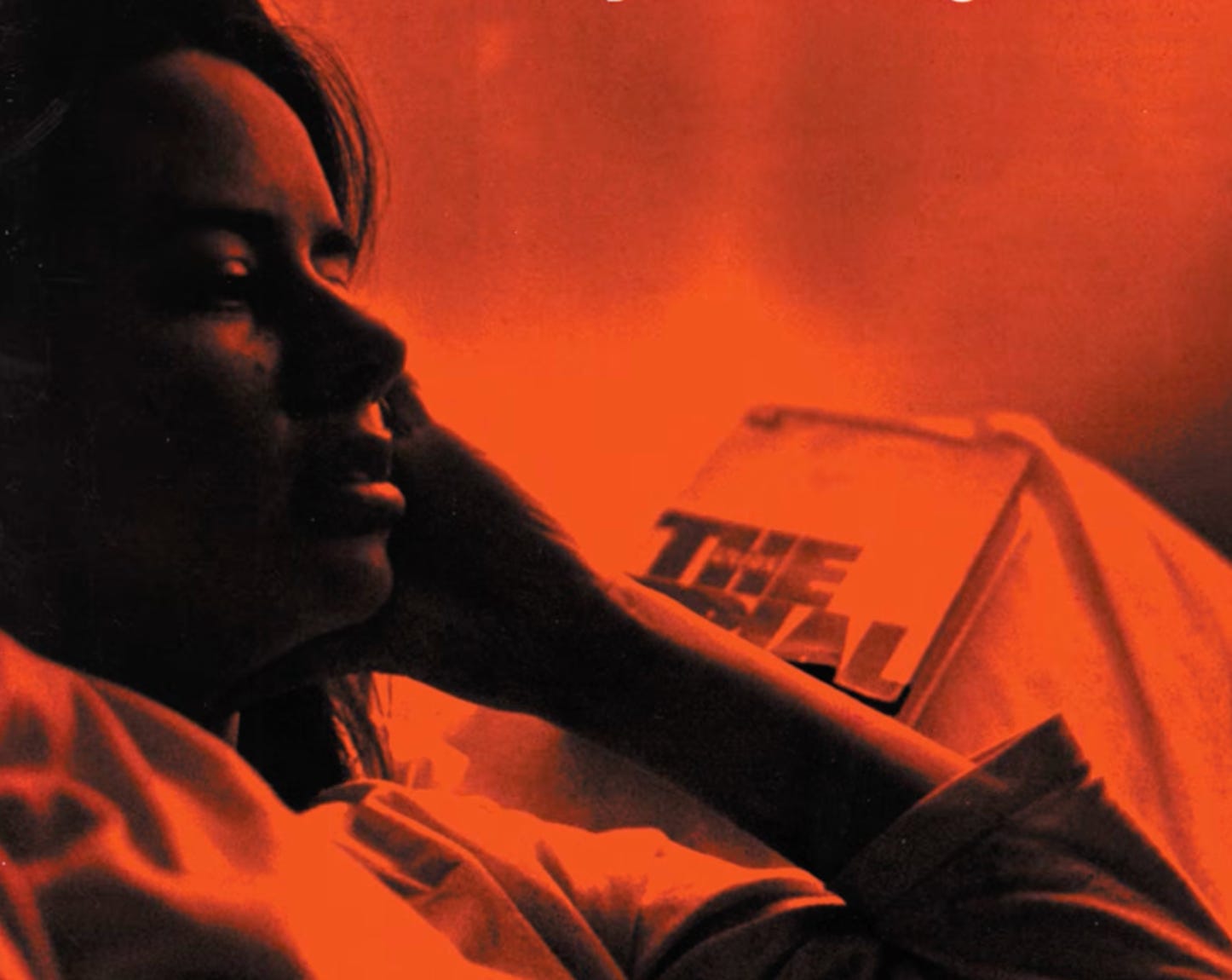
A few years later I bought the album, the band’s second, If You’re Feeling Sinister, on one of the pilgrimages my family would take to the closest city, since our town didn’t have a record store. I didn’t know much about the album’s influence, or its cult legend. I didn’t know the circumstances of the band’s creation, or Suart Murdoch’s illness, or the almost accidental way they ended up making two of the greatest records of the era, all within a couple months. I only had that beautiful cover: the young girl, on her bed, with a copy of Kafka’s The Trial lying on the pillow next to her. The music sounded and felt just like that cover, with its wry little stories about enviable student athletes, and boys menaced in parks at night; kids writing songs, kids practicing kissing with their elbows; characters like the Major, or the liberated boy “throwing discus/For Liverpool and Widnes,” or the Fox in the Snow, or the Mayfly, and youths with simple names like Lisa, Hilary, Anthony, and Judy with her dream of horses. It was only by the strange, spiritual alchemy of great pop music that this alien land of wispy Scottish hipsters — as dense and evocative as any novel — felt like the right inner landscape for me, an American boy, fifteen years later, thousands of miles away. . .
I think this was because the music didn’t lie. Unlike the endless twee nonsense propagated by the band’s many disciples (there’s a direct line of misunderstanding from the insufferable Millennial hipster archetype directly back to Sinister, as surely as there is from hair metal back to Led Zeppelin, or terrible Christian rock to U2), Belle and Sebastian came at their winsomeness the way Salinger or Wes Anderson did. Yes, there was an exquisite over-sensitivity, a sense that the pain of uncoolness was essentially redemptive — something exploited by every lousy contemporary poet or hipster narcissist ever since. But in Murdoch’s songs, this was always achieved through deliberately ironic and subtle fictions. In the early days of the band, he was briefly one of the greatest pop songwriters ever: he had the true Brian Wilson touch, could dramatize teenage feelings in a way that was achingly grand and gorgeous. The difference was that for Murdoch, the ultimate victory of the tragic and lame is much more tenuous and hard-bought (it would seem nearly Christian, if his characters weren’t so suicidal and, frankly, what we now call Queer). His music is a self-conscious bulwark against the callousness of the world but, since it’s also a kind of literature, it has no big lies to tell its listener about reality or “truth.” Only the comfort of finding a beautiful feeling, and clinging to it in the face of tragedy — which in Murdoch’s case meant catatonic fatigue and depression.
Take the way “Get Me Away From Here, I’m Dying” transitions into the next song on the album version — something it took me two years to finally hear, after first discovering the song. The last jingly notes fade out, and the album’s sunniest song disappears into its bleakest, the title track (“If you’re feeling sinister/Go off and see a minister/He’ll try in vain to take away the pain of being a hopeless unbeliever…”). But first a lingering moment of pathos and real genius: the sound of children, playing somewhere in a Glaswegian schoolyard, a sound which continues for nearly a minute over track’s wintry bounce.
Then all that beauty and wistfulness turns into the necessarily soft bed for a tale of suicide and resigned atheism. In the first verse, a boy named Anthony walks to his death, “because he thought he’d never feel this way again,” and because whatever’s on the other side is “bound to be less boring than today.” In the second verse, a girl named Hilary does the same. The reasons cited include more boredom and boringness; thoughtlessness, loneliness; her private interest in “S&M and Bible studies.” And it’s this combination that gets us so close to what makes the world of Belle and Sebastian singular — since in the world of B & S, both interests would seem completely earnest, and uncontroversial, but in the end equally ineffective against the torpor of the modern world.
In the third verse, Hilary goes to the Catholic Church, and “the vicar, or whatever” is hardly any help. So she goes to British cable TV and radio instead:
When she got back, her spirituality was thrown into confusion
So she got a special deal on renting from the man at Rediffusion
Look at me! I’m on TV
It makes up for the shortcomings of being poor
Now I’m in a million pieces, picked up for deliberation
By the people listening at home
By the people watching on the telly
By the people listening at home
By the people watching on the telly
Then the song winds down to its end, all the way through a kind of 5-minute-long short story, one that manages to pack in late twentieth-century consumerism, the death of religion, and a frank approach to suicide — all of which are disturbingly light, funny, and ultimately sympathetic. The final words say it best: go off and see a minister if you want, sure, but “chances are you’ll probably feel better/If you stayed and played with yourself.” To this day, I’m still moved by how much Murdoch manages to do with so little; amazed at how a single song can perfectly communicate the dazed and melancholy inner world of isolated weirdos, in a manic time. No pop music better articulates the perverse humor and beauty of severe depression. The moment I heard it, I was a committed Belle and Sebastian fan for life.
✫ ✫ ✫
Such was my own introduction to the band — the kind of intensely intimate moment their music has always thrived on. But it wasn’t the way the world was introduced to Belle and Sebastian: that was through the band’s legendary first record, Tigermilk, in early 1996, a record that only received 1,000 initial pressings (extremely valuable collector’s items these days), before slowly circulating around the United Kingdom. It wouldn’t even reach the U.S. until 1999, at which point the band had already released If You’re Feeling Sinister, several EPs, and their third record, The Boy With the Arab Strap (1998). The story of how Tigermilk eventually came to be made is a mythic litany of things that simply don’t happen anymore.
To begin with, there’s the story of Murdoch himself, who developed myalgic encephalomyelitis (chronic fatigue syndrome) sometime in the late 1980s, a disease that left him stranded at home for years, unemployed until around 1994, when he started to write his first songs. It was through an unemployment program run by Stowe College that he met future bassist Suart David and started cutting demos. By 1995, they were adding more bandmates: Stevie Jackson on guitar, Isobel (“Belle”) Campbell singing and playing cello, Richard Colburn on drums, Chris Geddes on keys. Tigermilk itself was the result of only three days of recording sessions, part of a final project for their music business course, released in 1996 on the college’s record label, Electric Honey. Soon the record found its way to the legendary DJs John Peel and Mark Radcliffe at the BBC, and London record labels came knocking. On the condition that the band would do no music videos, interviews, promotion, or press of any kind, B & S signed to Jeepster Records. They added Sarah Martin on violin, and started rehearsals for the second album, in the church where Murdoch was working as caretaker. That record, If You’re Feeling Sinister, was tracked in just five days, and released later the same year.
All of this sounds unbelievable, but it’s true, as far as the historical record goes. And it’s all key to the brilliance of those two records — emerging out of near-anonymity, with that peculiar name, a few iconic album covers, a growing cult following, and these impeccable pop songs about kids wandering around a depressed literary Glasgow, in the final years of the century (though, really, outside of time whatsoever). As Murdoch has attested, he wanted the records to be free of the normal music industry packaging, wanted them to seem like the dream of “a fictional hipster couple” making this music in a kind of storybook world, just adjacent to ours. Tigermilk is especially this way, overflowing with fucked-up outcasts, freaks, and kids on the edge — more like a suite of short stories than any album I’ve ever heard.
Take “Expectations,” in which an unnamed girl wants to work in Debenhams, while at school her teacher looks up her skirt, and the other kids mock her for making “life-sized models of the Velvet Underground in clay.” Or “She’s Losing It,” the ur-text for thirty years of twee, with lyrics all to do with Lisa and her friend Chelsea, who was abused when she was young (“It changed her philosophy in ‘82”); the two girls wind up in a school “Where the boys go with boys and the girls with girls.” In “My Wandering Days Are Over” (written after Murdoch met Isobel Campbell), the singer finally finds his Belle performing in a Japanese restaurant, while “a spooky witch in a sexy dress” tells him “the story of the way it should be/The story of Sebastian and Belle the singer.” And in the album’s closer, the titular “Mary Jo” dreams of cigarettes, “And a thespian with a caravanette in Hull,” while reading a novel called The State I’m In.
The name of that novel ties back to Tigermilk’s greatest song, its first — the song that would have been the very first listeners’ first introduction to Murdoch’s idiosyncratic world. But “The State I’m In” isn’t just the greatest song on the record: it’s in the running for greatest song of that decade; a personal and generational epic, a “Like a Rolling Stone” for the 1990s. Beginning with the greatest first verse of a first song of a first album in pop music history:
I was surprised
I was happy for a day in 1975
I was puzzled by a dream
It stayed with me all day in 1995
My brother had confessed he was gay
It took the heat off me for a while
He stood up with a sailor friend
Made it known upon my sister’s wedding day
So much is packed in those few seconds — the eliding of past and present; the shy disaffection; the smothering expectations of the big, dull, hetero world; and an immediate, sly sense of humor. But it’s also the beginning of something fairly new in the world of Anglophone pop: the sound of a wholly peculiar, private world, about to swell to an immense, anthemic level — exactly what so many ambitious indie songwriters have been aspiring to in the decades since.
From there the song only gets funnier, stranger, more tender. The singer (Sebastian?) marries a kid to save her from being deported, then cures her (so he says) on the Sabbath, then goes to take confession. The priest, a man with a “photographic memory for all he had heard,” takes the singer’s confession and turns it into a pocket novel he calls The State I’m In. The singer wanders through Glasgow (“Riding on city buses for a hobby is sad”), idles around (“Now I spend my days turning tables round in Marks and Spencer/They don’t seem to mind”), gives himself to sin, gives himself to providence, goes “there and back again.” Eventually he has no other choice but religious surrender. Though even that doesn’t go right: “And so I gave myself to God/There was a pregnant pause before He said ‘Okay.’”
Even quoting and summarizing it all like this, it sounds like a half-decent pocket novel, after all. But of course, within the song’s world, it’s all being done over an impeccable, rising vamp: pianos, warm chiming guitars, organs (despite having never played together before recording, the band was turning into a very good one). Belle and Sebastian accomplish their entire effect in just these opening five minutes. If they had never recorded another song, they still would have accomplished something epochal. And thirty years later it still sounds like the ultimate yearning anthem of its time. Its half-tragic/half-bemused DNA has spread everywhere — tumblr posts, Millennial irony, Millennial over-sincerity, Zoomer genre agnosticism, navel-gazing poems, novels, Vampire Weekend, Sufjan Stevens, Alvvays. Though none of these as subtle or as beautiful as the original inspiration.
✫ ✫ ✫
When Murdoch moved on to making If You’re Feeling Sinister, the songs shed some of this storybook quality. No more notes of slight fantasy: the conceit of the Glasgow “hipster couple” gives way to something more intimate and real. The music itself becomes almost spectral: perfectly produced for a maximum openness and airiness, distant and nostalgic, even as Murdoch’s melodies become intensely focused, diamond-like in their ability to hook and catch at the ear. As even Robert Christgau said at the time (a critic not known for his patience with either UK indie music or soft, twee pop): “You don’t just recognize these tunes. You don’t just hum snatches in tranquility. You sing along, irresistibly, sometimes with verse and chorus both.”
This starts immediately with the opener, “The Stars of Track and Field,” an elegant double of “The State I’m In,” beginning with Murdoch and his guitar before steadily building up the whole band behind it. But all that (fanciful, fictional) autobiography is gone, replaced with a series of beguiling questions and descriptions pointed towardssomeone else, unnamed: “Make a new cult every day, to suit your affairs…” “You’re a honey with a following of innocent boys…” “Have you and her been taking pictures of your obsessions?/Cause I met a boy who went to one of your sessions…” “Could I write a piece about you, now that you’ve made it?” “Could I write a requiem for you when you’re dead?” The lyrics are somehow more specific, in all their peculiar details, but vague and archetypal otherwise — which makes complete sense in a song that builds up to the phrase, “The stars of track and field are beautiful people.” It’s the sentiment and sound of pained desire from afar, from the lonely, loserly side of town, a place filled with envy for all those beautiful people on the inside (and even more moving when you learn that Murdoch himself had been a marathon runner, before illness hit him so young).
This blend of specific detail and archetypal scene is a huge part of what makes If You’re Feeling Sinister special. “Seeing Other People” finds its characters lying on the bed, “kissing just for practice,” while a queue of boys forms behind them, and the singer begs: “Could we please be objective?” It’s funny and incredibly sad, but only gets more complicated as the singer sings (to himself? to someone else?):
You can bet it is a bitch, kid
But if they don’t see the quality then it is apparent
That you’re gonna have to change,
Or you’re gonna have to go with girls
You might be better off
At least they know where to put it.
A universal scenario — lust, embarrassment, the desperation of early sexual escapades — is made unbearably intimate (“A hand over my mouth/A hand over the window”) but still these details float along over the warm piano, reminiscent of Vince Guaraldi’s Peanuts music, and become an iridescent, impressionistic wash. More characters come and go throughout the record — “Me and the Major” satirizes the absurdity of more than one obstinate generation; “The Fox in the Snow” seems to be about both a literal fox and the kids it symbolizes; while in “Mayfly” the titular bug serves as an excuse for the singer to reminisce on more loneliness and love affairs (“Your diary’s looking like The Bible/With its verses lost in time…”) — but more often than not, they also seem like the universal abject children of the world.
And in the center of all this is the ultimate abject child Murdoch, who finds his way into some dozen of the most perfect expressions of adolescent melancholy in the history of recorded music: “All I wanted was to sing the saddest song…” “Kid in the snow, way to go/It only happens once a year/It only happens once a lifetime, make the most of it…” “Second just to being born/Second to dying, too…” “The best looking boys are taken/The best looking girls are staying inside…” “What is it I must do to pay for all my crimes?/What is it I must do, I would do it all the time…” I could gather up half the lines from the record, like this, and they’d serve just as well — they all have that tender, miniature perfection, like the thoughts young people think they’re jotting down in their private journals, only to look back on later in life, realizing they thought the same things every young person everywhere has always thought. And from moment to moment, that’s often exactly what If You’re Feeling Sinister is: the transcription of the world’s own cringy teenage diary, taken to its most exquisite, ultimate expression. Because it’s being written by an older man, with years of loss and hard-won wisdom behind him, it never stoops to bad high school poetry, but makes those sentiments something timeless.
This is what has always charmed me most about the record, what shook me when I heard it, what keeps me returning to it constantly: it really does not lie. It understands exactly the soft, warm, almost holy feeling of our teenage nostalgia — but doesn’t pretend that those days were anything but sad, cloudy, and inhospitable. And isn’t this what it’s like, getting older? We go back to muse on all our lost days, all our innocence, and discover there was absolutely nothing innocent about it. What were supposed to be our “happiest years,” years as unbothered kids, were filled instead with long, drawn out days spent alone in bedrooms; sticky, unpleasant kisses (or more) that left us ashamed for lifetimes; thoughts of suicide, fears of abuse; and the deep worries that there was something especially wrong with us, which no one will ever accept, which we’ll never be able to heal. In “Like Dylan in the Movies,” Murdoch puns around but makes the stakes perfectly clear: “Well, if they follow you, don’t look back/Like Dylan in the movies/On your own, if they follow you/It’s not your money that they’re after, boy, it’s you.” Maybe we grow older, and those parks we once played in seem scarier at night, now we know what kinds of people are really out there in the world. But the truth is we were just as scared of it when we were children, maybe even more so — because we didn’t know exactly what to be afraid of.
Of course, If You’re Feeling Sinister doesn’t want to be a stark or disabusing sermon. It’s a work of art, and a profoundly comforting one. Thirty years of obsessive fans and dedicated listeners attest to that — the record has a remarkable hold on the people who love it; the sentiments are nearly always the same, cliches that ring entirely true: “This record saved my life,” “This record got me through the hardest times,” “This record makes me feel less alone in the world.” I’ve certainly felt all of those things, and never in a dull, sentimental way. Years later, having gone through debilitating physical diseases not too dissimilar to what Murdoch himself went through (diseases that also derailed the literary and musical careers I’d dreamed of since the time I first heard Belle and Sebastian), I don’t even find If You’re Feeling Sinister particularly “twee” or “precious” anymore. Each time the record reaches its fairly triumphant finale, “Judy and the Dream of Horses,” I only hear a well-earned victory over unbelievable pain, sadness, and harsh reality.
And it is a victory. Because to come out of all that, and never stoop to becoming hard, or false, or indulgent (as Murdoch managed to) — is an extraordinarily hard thing to do. To come close to death, close to losing yourself completely, and to emerge from it, still believing in the necessity of life and art and energy, is the kind of thing that sounds unbearably corny and cringy to anyone who hasn’t had to do it. Belle and Sebastian went on after Sinister, and they made plenty of good albums, and Murdoch has had a great career, all that suffering aside — but nothing will ever come close to the testament of those first two records, Sinister especially. When you’re inside it, you feel the zenith of an entire lost world of underground music — you feel the entire weight and reason for its existence to begin with. And you experience a change in what pop music actually can do. A change we’re still exploring, too often forgetting. People like to moan a lot about nostalgia these days. But this is, I suspect, mostly because they don’t actually listen to the music they claim to love anymore — they take it for granted, and put it on in the background, turn it into wallpaper.
But you can go back and listen to If You’re Feeling Sinister thirty years after it first entered the world, and if you’re really listening, you won’t have any reason for nostalgia. You’ll see that nothing has really been lost — there was never anything to lose. When I was given that CD, years ago, and heard that song, I didn’t realize I was participating in the final moments of a bygone kind of subcultural identity, the trading of objects and records like currency for the strange and lonely; the ushering in of each next weirdo into the fraternity of cultic listeners; the very thing which that whole lost world of “indie” culture was originally built on.
And yet I have no nostalgia for this mode of sharing; no nostalgia for scenes. I have the music, and the inner world it conjures for me, which is what always mattered most anyway. Go back and listen — it’s not as if you’ll travel into some dusty, forgotten Glasgow of yesteryear. You’ll travel to a real place, alive and waiting, only out of time, within the imagination — the imagination of a young Glawswegian at the end of the last century, which somehow lit the imaginations of people all over the world, and keeps doing so. Since you cannot be nostalgic for something that’s still alive. Whatever you are nostalgic for, it’s only waiting there to be brought back to life again, which is exactly what the greatest records do. And thirty years on, I feel certain that If You’re Feeling Sinister is one of the very greatest. The more time passes, the more timeless it becomes.
The Hinternet needs your support! Upgrade to a paid subscription now!
Upcoming Events
November 11. Oort Cloud Review launch event, Camden Art Centre, London, 7pm. REGISTER NOW!
November 23. Hinternet Foundation Inaugural Summit, La Gaîté Lyrique, Paris, 2pm-10pm. REGISTER NOW!
Hinternet Foundation Online Courses
November 3-December 15. “History and Philosophy of Astrobiology”. REGISTER NOW!
October 1-November 12. “Clavis: How the Voynich Manuscript Tells the Story of the Modern World.” IN PROGRESS!
August 7-August 22. Hinternet Foundation Inaugural Summer School: “Whither the Humanities?”