

Something of our poor brief childhood is in it, something of lost happiness that can never be found again, but also something of active daily life, of its small gaieties, unaccountable and yet springing up and not to be obliterated. And indeed this is all expressed not in full round tones but softly, in whispers, confidentially, sometimes a little hoarsely. Of course it is a kind of piping. Why not? Piping is our people’s daily speech, only many a one pipes his whole life long and does not know it, where here piping is set free from the fetters of daily life and it sets us free too for a little while. We certainly should not want to do without these performances. —Franz Kafka, “Josephine the Singer, or the Mouse Folk”
I.
A musicology professor once offered my class the only definition of jazz I’ve ever thought truly apt. He said: “Jazz is the music jazz musicians play.”
You are listening to a piece of music. You wonder: is it jazz? You have only to ask yourself: what kind of musician is making it? Is it a jazz musician, or several jazz musicians? Very well, you’re listening to jazz. If it isn’t? Then you’re probably listening to something else.
The circuity is the point. Since it’s an idiom, a tradition, a world mostly to itself, jazz should not really be defined (if that can be helped). And yet—we’re certain that there was, sometimes still is, something called jazz. It was already conscious of itself as different from other kinds of music, early on. There are many moments we could point to as evidence of this difference. So I’ll choose the best I know: that moment when, in 1926, Louis Armstrong dropped the lyrics from the lyric stand while cutting “Heebie Jeebies” with his Hot Seven band, and covered for the mistake with the first official scat-singing on record. So Louie became the first Jazz Singer, not only because he scatted but because as a singer, he understood his voice was no different from his horn—and what both were really meant to do, was to take up all the dim, repetitive variations he’d encountered in his life and spin them into a different plane altogether.
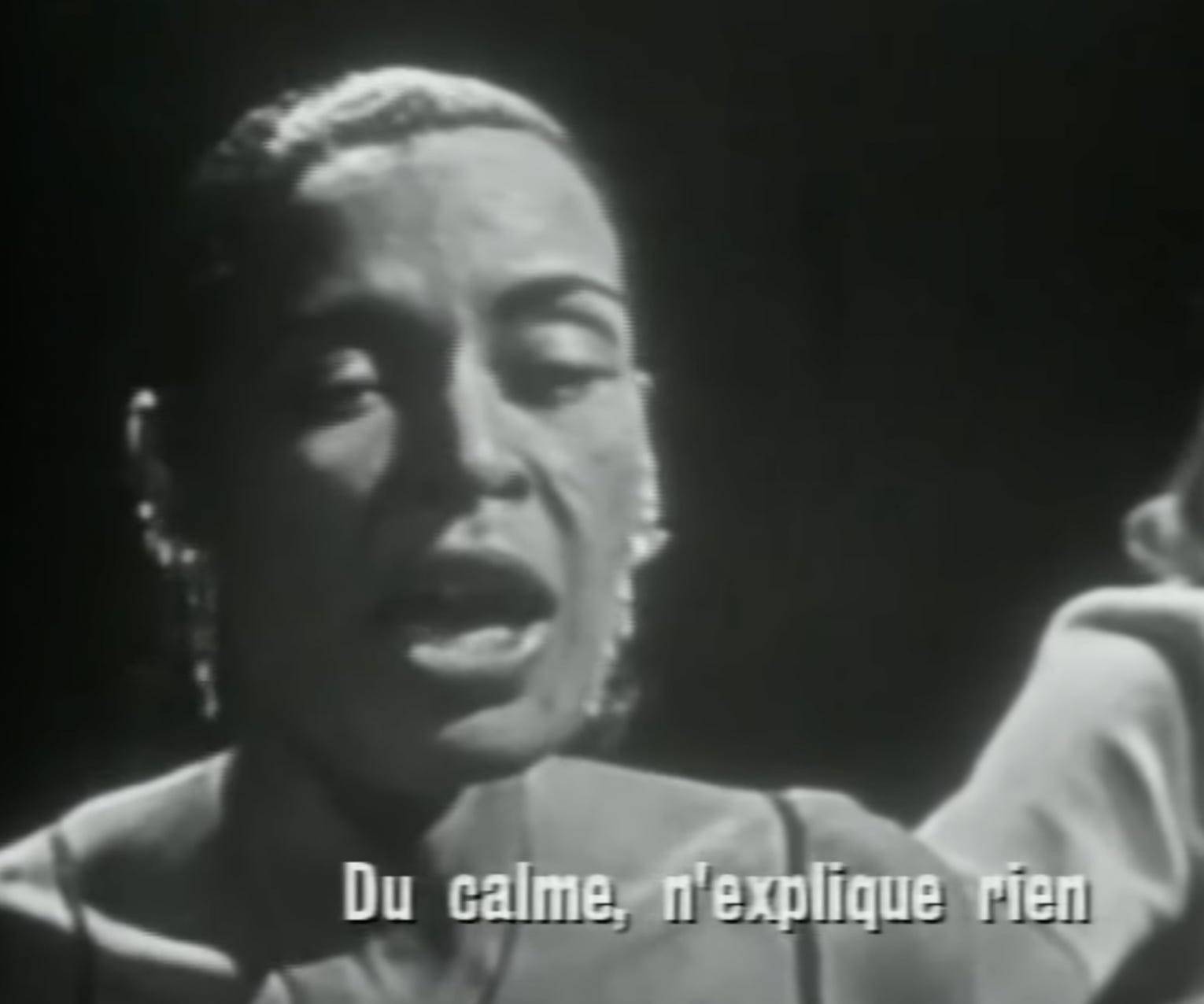
Other jazz musicians played perfectly well. Jelly Roll Morton played, Fletcher Henderson played, and King Oliver played. But Louie sang—with his horn and his own natural instrument alike. And his precise genius for a kind of magical reinterpolation gave every soloist who came after him their own signature difference, too. Not just to play the thing over, with enough variations to scrape by, keeping the attention of the dancers and booze drinkers in the joint, an audience always dangerously ready to get on to the next scene. But to root people to the spot, to show them, to tell them something—to make it about the music itself, music and not decoration. Where others heard “St. Louis Blues,” or “I Can’t Give You Anything But Love,” or “Stardust,” Louie heard a dozen other things: harmonies, alternate melodies, moods. Your normal popular performer—Al Jolson, for instance, whom Hollywood enshrined as the face of the new talking jazz age—might sing those melodies, embellish them a bit, lean into the words, and be a decent interpreter. But for Louie the words were a pretext, a way to get him into the real thing, which was spinning off from the center and establishing its own free ellipse in orbit around it. Louie made music essentially about music—the same way every great play is really about plays, and every great movie is really about movies.
This is what his singing was, too, with scatting at the abstract extreme. First the words: start the verse, let the meaning of the song come through, establish the center. Then roll outwards, in potentially infinite variations, streams of new melodic and harmonic ideas which in Louie’s hands were as full and complex as whatever original piece he’d picked up and toyed around with. For decades afterward jazz musicians would go on building an unbelievably rich scaffolding on top of these principles—expanding into denser arrangements, more sophisticated harmony, improvisations of dazzling virtuosity and invention. But the basic difference was the same: jazz was music that had somehow built a space, nested within the full tradition of American Song, where the point of the music was to build on music, in a kind of exegesis on its own workings: it was reinterpretation raised to a fine art; a moment of singular, incendiary reinterpretation. It would expand beyond mere genre, develop its own standards and classics, its own idiolect, its own rhythms, yes—but the point of it all would always lie in the way these things were used, to burst wide open the repetitions and limitations of the popular music of their day. To make a new world of music out of it.
For the great jazz singers, the jazz difference is a bit slipperier. And this is for one simple reason: The Great American Songbook, the thousand or so songs in the canon of primarily Jewish and Black songwriters, which emerged just as the new jazz language was becoming the substrate of Broadway and Tin Pan Alley tunes, in the Thirties and Forties. Men like Cole Porter and Irving Berlin and the Gershwins weren’t jazz musicians. But jazz informed the songs they were writing for the masses. And jazz musicians paid them back in turn for their material, taking those songs and transforming them into sandboxes, little zones of exploration, which would be transposed and re-done by musicians for decades afterwards as if there was no way to really exhaust their essence (since, frequently, there wasn’t).
Here at The Hinternet, we write for our PAID SUBSCRIBERS. We are currently offering a huge discount, in the hope that you will FINALLY decide to become one of them!
We also encourage you to give your friends and family GIFT SUBSCRIPTIONS to The Hinternet. You’ll be doubly loved for it!
