

You have just a little over two weeks to apply for the Hinternet Foundation’s fall course, “Clavis: The Voynich Manuscript, the Riverbank Institute, and the Philosophical Origins of the American Military-Information-Technology Complex”. The Deadline is September 15, and the course starts October 1. Click below to apply!
Let’s begin with an inconvenient truth: there’s really nothing new to be said about Revolver, just as there’s nothing new to be said about The Beatles themselves. On this, the 60th anniversary of the most adventurous record by the most adventurous rock band in history, every tiniest piece of Beatles ephemera has been so mythologized and capitalized upon, there isn’t a single anecdote, not a moment of their music, not an interview or a recording that hasn’t been scoured, analyzed, and re-relayed to hundreds of millions of fans and obsessives in the decades since their breakup. The Beatles are an emblem and an industry to themselves, an unrivalled nostalgia project, and a colossus of pop symbolism so huge it can be difficult to even hear the music underneath it all, to understand its place in the short history of popular music (and the shorter history of recorded music), and the way it once shook the entire industrialized world awake — though awake to what, it’s still hard to say. We sleep so hard in this century. And we no longer believe our dreams.
Well you may ask: how does this music still dazzle us, then? How does it — like Beethoven or Bird — still appear to us like an Everest in rearview, like a peak already climbed, and we don’t how, though its shadow’s only growing wider behind us, in the path of the cruel postmodern Sun… How does each successive generation find itself in the same place, cracking their heads in disbelief against the output of only 8 years — 1963 to 1970; a little over 200 songs, 12 studio albums — and wonder how four Northern boys became the most famous musicians in the world, managing to so coalesce that ultimate decade of cultural upheaval (the fuckin’ Sixties, man, dig) they ended up the symbol-to-end-all-symbols of commercial pop’s triumph as the last great artform of the 20th century?
Well, as John Lennon himself once sang: “It’s eeeeasy.” The truth is that everything written up there above’s just a bit of flashy rhetoric. The Beatles didn’t stop happening, the Sixties didn’t stop happening, pop’s triumph never stopped, “rock” was a historical mood not a genre, and postmodernism?…well, postmodernism was probably just more modernism in the end. The truth is a door opened in 1964, the moment America first heard “I Want to Hold Your Hand,” and flooded the DJ booths with ten thousand adolescent requests — a genuine science-fiction portal in actual time opened, right then and there, ripping apart the temporal fabric of the modern world, letting in a single word, one little idea, which heretofore had been the province of syphilitic poets, and Tin Pan Alley numbers, and D.H. Lawrence, and greeting cards: love. Yes: “love.” Can’t buy me love, all you need is love, love me do, she loves you, all my loving, and i love her, you’ve got to hide your love away, love love love love love….The Beatles meant it when they sang about love. And what’s more, they meant all kinds.
This is difficult to explain. We may still be living (existentially, spiritually, semantically) through the Sixties, through modernism, rock, pop, and the decades-long postmortem of the Fab Four themselves — yet if there’s anything we’re assuredly not still living through, it’s love. Love died in 1970, with The Beatles, and not even a Cirque du Soleil show could revive it. Whatever it is we mean when we throw the word around these days, it’s certainly not what people used to mean by it. Sure, we may tell ourselves we’ve improved on it, that we’ve given it all manner of nice, uncomplicated new dimensions, hugs and kisses. But love as transport, love as destruction, love as cosmic fulfillment and love as annihilation, love as the kind of teenage ecstasy so profound it can’t help but blast outward, into a Dionysian rupture of bodies, into a cleft in history itself, leaving a trail of dead movements, wasted spirits, and idiot therapies in its wake — can we really, from our antiseptic anxious century, hold a candle to that once-great King of All Earthly Pursuits, that babe-and-seashell-queen LOVE?
We can’t and we shouldn’t. But on this, the 60th anniversary of what might just be their greatest record, we should absolutely, without question, listen to The Beatles’ Revolver, and try (at least for 34 min 35 sec) to remember…
✫ ✫ ✫
There’s a moment in “I Want to Hold Your Hand” where John and Paul harmonize across the lyric, “It’s such a feeling that my love/I can’t hide/I can’t hide/I can’t hiiiiide.” They’ve just done the middle eight (their preferred term for a B-section: few people realize that a lot of Beatles’ songs don’t have a proper chorus, or a bridge; instead they rotate sections, A B A B A, which is why a Beatles song that lasts just 2:25 packs in enough hooks for twice that length of time)...anyway, they’ve just done the middle eight, “And when I touch you I feel happy inside…” (surely the most innocently sexual thing ever sung in a pop song) and now they’re explaining what else that feeling does: in short, it makes them want to break out, to shear away all secrets, leaving them with nothing else to do but declare “I Want to Hold Your Hand” all over again.
But it’s the way they do it that pushes the recording past the proverbial sound barrier. Before this moment, the middle eight was nearly jingle-jangle, a bit straight and square and limp, at least compared to the cha-cha of the A section. But when the boys hit that triple “I can’t hide,” with drums in tow, not only do they create the kind of drag and drive every rock band would be chasing ever after (the birth of punk, basically), but as Paul and John hit the harmony over that final “hiiiiide” — you can literally feel this, the first time they do it in the recording — their voices go so bright they’re blistering, like they’re peeling away the wax of the recording itself, clipping through recording booth, singeing your inner ear hairs. The sheer force of their voices: nothing, certainly no pop record, had ever sounded like this. Innocence and sex in complete cohabitation; more polished than any American rock n’ rollers ever were — almost vaudevillian in their gift for the entertainer’s flourish — but then, for a moment, like a jet plane, like pure molten energy, lifting up to a dizziness no Romeo or Young Werther ever knew. Later, when it came time to trade in this puppy love for a kind of psychedelic agapē, they didn’t really have to change a thing. The foundation was the same. The foundation was bliss.
✫ ✫ ✫
So they bopped around the globe, and they met Ed Sullivan, and they carried off a string of number one hits so consistent only Elvis could compete, while the decade built up around them in a mad rush of bands and singers and studio freaks trying to compete with what was, even by 1965, obviously not your normal teeny bopper hit parade. Help! was weirder than Beatles For Sale, which was weirder than A Hard Day’s Night. Then came Rubber Soul, in December 1965. Sitars, pot, anomie, folk music, French, The Byrds, Stax Records, little Baroque details, sexual betrayals, a streak of paranoid misogyny, tales of burning a fling’s house down — The Beatles were now being altered by a popular culture quickly growing more daring and passionate and hip, largely in response to the provocation of their own original success.
Still, they weren’t as genuinely cool and aloof as Dylan, or as beatifically gifted as Brian Wilson: they weren’t really geniuses, they didn’t “see what no one else can see,” or at least not yet; they were still upstart naifs with more talent than they had the skill to deal with. Meanwhile the Stones and the Kinks had wrested complete possession of all emerging Dionysian danger; The Byrds and untold American poetasters were wielding Dylan’s genius as a flag against the new musical War of 1812; Motown was wreaking absolute revenge for the rock n’ roll era’s ocean of Black rip-offs; and the kids now seemed to prefer Herman’s Hermits (which is what the ad-men thought The Beatles actually were). It was far from inevitable that The Fab Four would be more than a brief, wild success, far from inevitable that they could become legitimate pioneers. 1966 changed this.
Now, one reason Rubber Soul holds up so well is (ironically) because it doesn’t sound much like its decade. There’s next to no room in the mix; the mix is airy; you can hear every part, every little flub. George Martin was recording them the way he’d recorded all those classical ensembles for EMI — with an ear to total clarity. With the band beginning to think through their tracks as individually dubbed lines, stacked almost like Baroque partwriting, or Renaissance polyphony, Rubber Soul started building arrangements in a way Revolver would later codify. Recording single tracks and abandoning complete-band live takes led to a greater emphasis on harmony, which emerged naturally as different melodies got laid crosswise over each other. Brian Wilson already thought this way on his own, though his production always tended toward the creation of a deeper textural space (which The Beatles would echo a year later on Sgt. Pepper’s). But The Beatles had to discover it slowly, as a collective, egged on by Martin (without whom none of these ventures would have been remotely possible). This was especially true for Paul — always the arranger and genuine instrumentalist of the group — whose bass parts increasingly behaved like proper counterpoint. Rubber Soul ushered in the beginnings of The Beatles’ particular kind of striated pop, and the immediacy and clarity of its peculiar studio sound meant it can’t ever really sound dated; though this also makes some of the record a bit brittle, awkward, and exposed. This, too, would change in 1966.
✫ ✫ ✫
Throughout January of 1966, two songs from late in the previous year competed for the number one spot on the Billboard charts: The Beatles’ “We Can Work It Out” and producer Tom Wilson’s electric version of Simon and Garfunkel’s “The Sound of Silence” (the version everyone thinks of today, along with the image of Dustin Hoffman gliding along an airport walkway). Here we have all the paradoxes of the era, laid out neatly before us. The first song’s a tossed-off flipside single from the heavyweight champions of the world, part of their label’s requirement that they release four singles a year along with their studio albums. The second’s a savvy commercial repackaging of a soon-to-be generational anthem, written by a young duo who represented all that was “literate” in New York folk poesy — the end result of everything the last Beat poets and folks down at the Gaslight Cafe had made out of the American folk revival (Dylan’s own original world, though by 1966 he was already on another planet).
To be clear, “The Sound of Silence” is stirring stuff: people bowing and praying to a neon idol, wild portents and signs, vague presentiments of youth revolt; like all the Allen Ginsbergs of the world were about to have their apocalyptic day…it’s hopelessly pretentious, and kind of wonderful, and twenty-three year-olds from then until judgment day will go on rediscovering it and feeling its ham-handed truths in their bones. But consider “We Can Work It Out” — a song sung by an actual 23-year-old (Paul; John, who takes the lead in the middle eight, was 25). The recording’s so clear and unadorned, it could almost be from the 1990s. The lyrics are direct and economical: “Try to see it my way/Do I have to keep on talking til I can’t go on?” then the middle eight (John, coming in to complicate things), “Life is very short/And there’s no time/For fussing and fighting, my friend.” No poeticisms here: the shift to a lightly-mocking waltz time does all the dramaturgical work that needs doing. Nothing but plain language, playing out the beat-by-beat of a lover’s strife in the midst of the most basic kind of break-up.
As with “Yesterday,” no popular songwriters before this had ever done anything so straightforward and simple and truthful. Before the rock n’ rollers came, America’s roadhouses overflowed with glorious blues and country keening; the Great American Songbook had filled lounges and movie screens from Shanghai to Paris with wit, and sparkling diamonds of love poetry, mixed with adult innuendo. Yet here were these two boys, the representative artists of the new pop generation, singing a melancholy, autumnal song about mending broken ties, while a lonely harmonium swelled behind them. (And if you want lyrical subtlety, it doesn’t get better than John’s ironic addition of the words “my friend” for the girl in question).
Consider, too, the number of early Beatles songs in the second person. An entire generation experienced the band as a couple of angelic voices coming through the radio, addressing them directly: “You.” Always “You.” “She loves you,” “I want to hold your hand,” “I may not have a lot to give, but what I’ve got I’ll give to you.” Now this generation was hearing their radiowave paramours singing something very different: “Think of what you’re saying/You can get it wrong and still you think that it’s alright…” And this just a few short months before a different number-one-band would be singing “My baby does the Hanky Panky.” The difference between the world and The Beatles was expanding. In the meantime, they were tossing off masterpiece miniatures left and right, singles like “Day Tripper” and “Rain” and “Paperback Writer,” which appeared like missives from remote Dutch masters, while around them the broader new Renaissance of pop culture was clearly in ascendance. The paradox of Revolver, which the band would record from April through to June of that year, is how this remoteness and naivety led them, not to create the anthems of their time (that would come later, with some irony), but to soak up everything around them and leap beyond it — in some cases so far, popular musicians are still trying to catch up, 6 decades later.
✫ ✫ ✫
What exactly is the revolver? The LP itself? The record groove spinning around and around? A wheel? A gun? No: a kaleidoscope. Revolve it one way, and you’ll see a different shape; revolve it another, new colors appear. Klaus Voorman’s Aubrey Beardsley evocation on the cover is all-important. Multiple black-and-white Beatles, several of each of them, some stenciled, some cutout and pasted in like a scrapbook. It’s Pop Art of the highest order. Yet, like the burgeoning, expanding soundworld of their music, it has all kinds of nooks and crannies for alternative styles and tones to hide in. The richest period of The Beatles’ music — the psychedelic explosion that begins with this record, climaxes with Sgt. Pepper’s and Magical Mystery Tour, and limps on through The White Album — is an art-historical kaleidoscope, almost science-fictional in the way it inhales the entirety of the previous century, and spits it back up as monolithic rock music.
Art Nouveau, the Modernists, Lewis Carroll, Edward Lear, shades of the Victorian, vague Edwardian childhoods, music-hall, vaudeville, Tin Pan Alley, Magritte, Hinduism, The Tibetan Book of the Dead, Musique concrète, the Marx Brothers, LSD, Romantic poetry, Bach, Kipling, Edgar Allen Poe — anything and everything could become part of The Beatles. The rest of the era claimed Universal Love and Brotherhood, but only in The Beatles’ music did the promise of the universal become so tantalizingly possible: everything they did communicated a genuine universalism and cosmic sensibility (which is where that vast ideal LOVE comes in again), even as they grew more obscure and self-referential, dividing themselves into characters and strange little stories. I love “Stand! Don’t you know you are free?” and “The times they are a-changin…’” and “I think it’s time we stop/Children what’s that sound?/Everybody look what’s going down…” as much as anyone — these great summa of the Sixties mentality only grow lovelier the older and hoarier they get. But when John Lennon sings “Jai guru deva/Nothing’s gonna change my world,” what contemporary sentiment could compare? The Beatles spoke the plain language at the center of their times, even as they rushed to elaborate it in a hundred directions.
Of course, with Revolver all of this was just beginning, and much of the record’s undying charm lies in the very compactness of that kaleidoscope. The record is composed of 14 miniatures, a perfect suite, not one song over 3:00, and with each turn of the kaleidoscope the glimpse you get is of an entirely different scene. The first of these ended up being the last: “Tomorrow Never Knows,” the product of their initial record sessions in May, a track they ended up placing at the end of the album. By now everyone has had their two cents on “Tomorrow Never Knows.” It’s one of the greatest recordings of the 20th century; it’s as good as Stravinsky; it still sounds like the future; compared to its fourth-dimensional psychedelia, all the jingle-jangle of the hippie bands sounds like the music of toddlers. The music columnist Tony Hall got an early preview of it that summer and called it “...a hypnotically horrific journey through the dark never-ending jungle of someone’s mind.” And so on and so on — all the clichés are true. There will be time to come back to it by the end, which after all is where they left it.
Well-rehearsed, too, are the stories from later in the year: the violence the band met with on tour in Manila; the protests in Japan (for playing the holy Budokan), and in America (piles of burning records in response to John’s “bigger than Jesus” snafu); and the final concert in Candlestick Park, in San Francisco (how’s that for prophetic), after which they’d simply had enough of the noise and the circus. A little less is known about what the lads themselves had been up to, before then, back in London, the lives they’d return to once they forswore performing entirely. In September, George would briefly head off to India for the first time, after meeting Ravi Shankar. Ringo got a pad in central London. And contrary to what most people would think, it was John who was off doing acid in the suburbs, feeling stifled, making life awful for poor Cynthia, while Paul galavanted around Swinging London: attending lectures by Luciano Berio; discovering Stockhausen’s music; showing off his new tape loop experiments to a bewildered William S. Burroughs; screening his homemade Bolex movies for Michelangelo Antonioni; bunking with the Ashers on Wimpole St., mixing with the genuine avant-garde.
This, too, is part of the genius of Revolver. That Paul — the concept man, increasingly the leader of the group, the experimentalist, instrumentalist, and budding virtuoso — would turn out to be a genius of the quotidian, of old-fashioned sentiment and musical portraiture. While John — the lazy, cynical solipsist with remarkably Freudian personal issues — would turn out to be the visionary genius of language, media, and the Modern Self. All love to George, who developed into a wonderful songwriter, but it was the confluence of the Paul-axis and the John-axis that formed the true drama of The Beatles (and here it’s worth noting another forgotten kind of love: that of two intimate but opposite brothers-in-arms). On Revolver, the two were just beginning to set the parameters of their obsessions.
For his part, George got religion because he needed a way out from between those unforgiving poles. George’s spirituality was always a cliché — far less interesting than Lennon’s archetypal self-probing. Yet it worked, since it was honest, and it brought the rest of the band’s experiments into focus. It was George and John who really fed off the LSD vision; Paul was a creature of control, he didn’t take to it long; while Ringo was, as ever, just along for the ride, more of a Beatle than the other Beatles (none of them got more fan mail than Ringo), a Fourth Stooge whose beauty lay in the fact that no one could ever love or need The Beatles as much as he did. He didn’t require LSD anymore than he needed to write the songs. His one job was being the drummer for The Beatles, and his increasing sensitivity to the whole project made him the best man for it.
But George’s daliance with Hindustani music was more than a lark or a fetish, and anyway it brought them all into an expansion of themselves. Perhaps they heard something in its drones and quarter-tones that might help them elaborate on the old British church modes, playing around the edges of their music. Plenty of Western artists were beginning to look to the ragas and ashrams of Hinduism as a source for psychedelic analogy — but to their credit, The Beatles were focused less on the cultural trappings, than on what could be done by playing a melody against that titanic OM of the Tanpura drone (though such that a lot of what we hear as “Indian” in their music really sounds more Gregorian than anything properly Desi). It was there in “Paperback Writer” and “Rain” — same as it had been in “Ticket to Ride,” even before their Eastern obsession. Unlike all the other British bands, most of whom were literalist fetishists of Black America, The Beatles took Little Richard, Motown, and the blues, and turned all those blue notes and flat-7s right back into sounds not far removed from British and Celtic folk music. This isn’t to say they knew they were doing this, only that their ears were tuned to whatever in the world sounded apposite, to them (there was that aspirational universalism again). Besides, Liverpool — like New Orleans or Hamburg — was a port city, and the docklands and wharfs of the world have always been the first site of unprejudiced cultural exchange.
Revolver opens with a George-Paul-John one-two-three: “Taxman,” “Eleanor Rigby,” “I’m Only Sleeping.” Even the first few seconds of George’s “Taxman” constitute a small revolution: studio noise, scratching on the tape, coughs, a disembodied “1 2 3 4.” Followed by a jumped-up almost-funk, and Paul’s beamed-in sitar-like guitar solo, and George’s bitter (reactionary?) screed against the sadists at the Inland Revenue. There’s something a bit Dickensian going on, even as the guitars chime out evidence of a modern world of automobiles and insurance claims.
From here Revolver’s pop revolution only grows older and stranger, as we land on “Eleanor Rigby,” the first of Paul’s perfect little portraits. 60 years hasn’t dulled George Martin’s arrangement for that double string quartet: mic’d too close, churning, crying, even; it’s the only pop-classical hybrid in history that really works. Here’s all evidence, prima facie: this revolution had little to do with the slogans of the world: instead it was moving backward and inward. “Eleanor Rigby” is like a lost relic of the late-1800s; Rigby herself could look something like Manet’s Berthe Morisot, grown old alone; Father McKenzie could be from a Thomas Hardy novel. It’s unimaginable, what this must have sounded like to the kids in 1966, only just beginning to see Youth Culture arriving at its period of highest veneration—and here was this dizzying retreat into a vague past, something Sgt. Pepper’s would soon spin into a true feat of imaginative anachronism. How often people forget that the “Greatest Rock Album of All Time” is really a surreal (and subtly conservative) fantasy on the level of Alice’s Adventures in Wonderland or The Wind in the Willows! But modernism is slippery like that.
From here it gets worse: “I’m Only Sleeping” won’t even be bothered with the outside world at all. Lennon the dreamer won’t leave his bed; the only thing he has the energy for is writing this paean to his own somnolence. So the first pop song to feature a guitar solo played backwards also featured a literal yawn, and John turns it into his first real statement about what he thinks true freedom is: relief from all the symbols of the world. From here the dreamer only goes further inward, into the half-raga of George’s “Love You To.” The kaleidoscope is turning, changing continents, changing cultures. It’s remarkable for just how earnest it is, and earnestly bitter: “There’s people standing round/Will screw you in the ground/They’ll fill you in/With all their sins, you’ll see.”
But revolve the kaleidoscope again and the trajectory is interrupted — Revolver isn’t a journey, after all, not the way Sgt. Pepper’s would be. With this turn we find ourselves landing on one of Paul’s loveliest love songs: “Here, There And Everywhere.” This next place feels like the Tin Pan Alley of the mind, or perhaps the Brill Building, except that it’s so pillowy and harmonically subtle — again, there’s almost a flash of vaudeville in it; it’s a classic divertissement between the acts. When it ends, and the next act begins, now the kaleidoscope turns toward a fantasy, a storybook world: “Yellow Submarine,” with its marching band sample and sound effects, Ringo presiding childlike over a novelty number that (in true Beatles fashion) would turn into an emblem for the band’s increasing sense of whimsy, the name itself going on to title another masterpiece of Pop Art — of all things, a cartoon movie.
From here the revolution of the kaleidoscope lands us in the middle of John’s reports on LSD ego-death in Hollywood (“She Said She Said”); then a jaunty day in the park (“Good Day Sunshine”); then a Baroque bauble with dual 12-string guitars (“And Your Bird Can Sing”); then a break-up set to French horn and a clavichord that sounds like a hand-crank organ (“For No One”); then a visit to the drug doctor, with a middle eight like an Anglican chorale (“Dr. Robert”); and now by the time we’ve realized we’re in final stretch of the record, George is filling out his last of three songs with a classic Beatles tune (“I Want to Tell You”) that wouldn’t have felt out of place on Rubber Soul, its grating half-step piano lick excepted of course. All of this — six unique states of mind — in just 13 min 25 sec. The kaleidoscope spins fast.
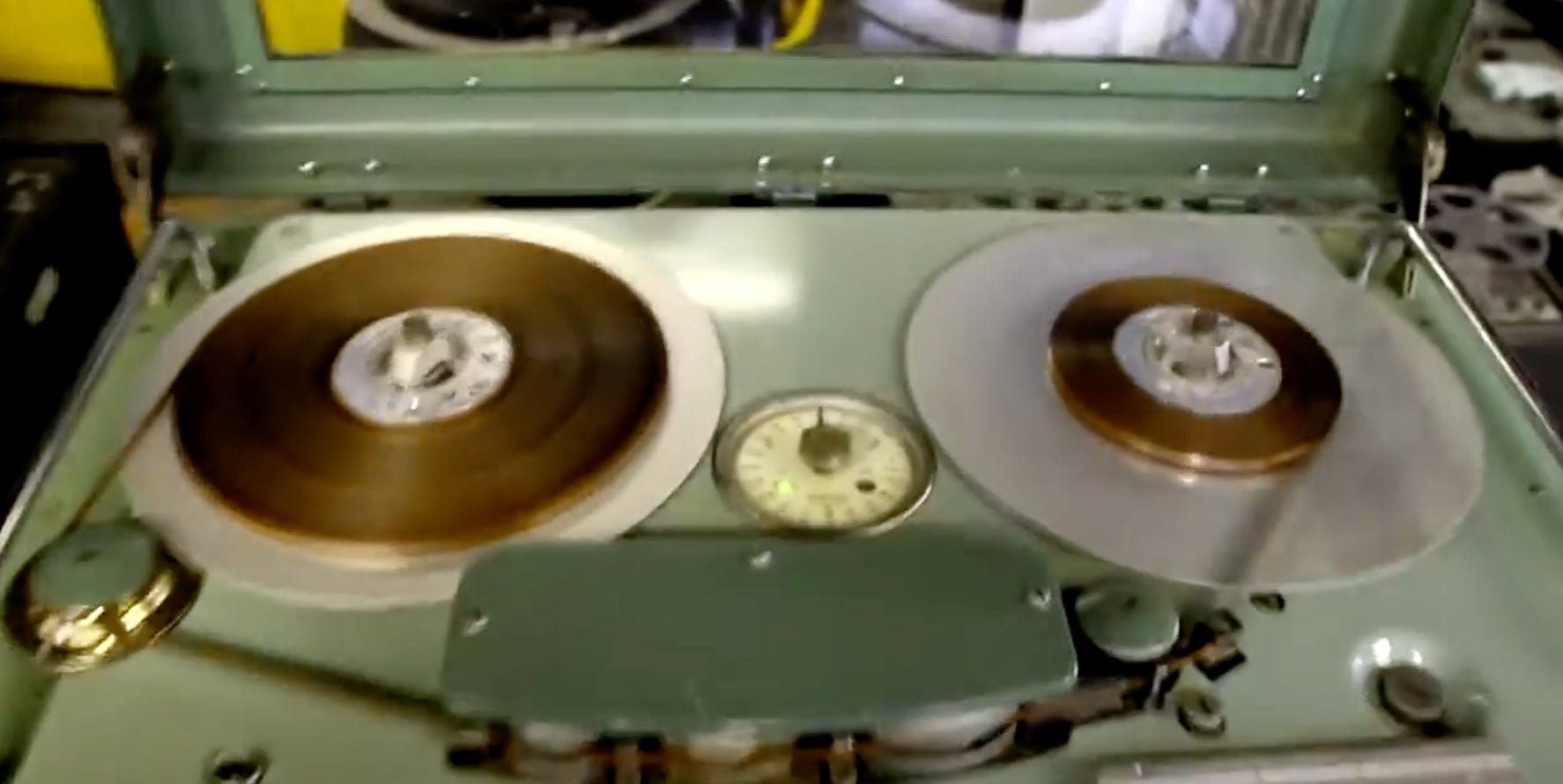
In the last two spots, we have in fact the first two songs recorded for the album: “Got to Get You Into My Life” and “Tomorrow Never Knows.” The first swings more than a bit like a Stax Records number: Paul once again displays his clear love of R&B; George Martin provides the Ellingtonian horn section; and a new blueprint for maximally smooth-and-soulful pop is born, handily presaging F.M. radio with a set of feelings and sounds that would last well into the late 1970s. But that final track is the ultimate pop cultural Voyage to the Moon: a tumult of drones and tapes; John’s voice through the rotating Leslie cabinet (“Like a Yogi on a mountain” he asked the young engineer Geoff Emerick to make him sound); Ringo’s neverending drum loop; more backward guitars; Timothy Leary’s CliffsNotes to the Tibetan Book of the Dead. It’s electronic music, it’s trance, it’s a future that will never actually happen, since it already did. Even “Strawberry Fields Forever” and “Revolution 9” wouldn’t be able to top what the Four pulled off with “Tomorrow Never Knows.” It’s not even the Sixties. The Sixties were about excess, mania, paranoia, tuning in, dropping out, mass protest, PEACE, and yes, LOVE. But “Tomorrow Never Knows” is happening somewhere else: a dimension of pure thought and electricity, naive and blissful and nowhere. In its white-hot embrace the mind is the imagination is the recording studio is the religion of all time is the drone between your ears. It is shining.
✫ ✫ ✫
Have I convinced you yet that the kaleidoscope is still revolving, never-ending? Temporally, spiritually… I hope at least I’ve made you consider it. 60 years later many of us are still revolving and revolving it, though I imagine most of us would agree the world itself has lost something of that original luster of love — at least the way that beautiful time imagined it. I hope I’ve suggested something else, too, which the history books always tend to get wrong: that what makes The Beatles remarkable — what makes us turn to them again, wondering why and how they did what they did, in so short a time — is just how little they have in common with their decade, despite simultaneously influencing and absorbing every single corner of it. Because they stood apart, because they built their own transtemporal world, an alternate dimension for everyone, they still come to us as beings out of time.
So in a sense, I guess this makes them the truest product of the Sixties, after all. But only in that paradoxical way: because they proved that the real revolution was an opening in time, a moment of new consciousness, out of which a million things could leak into our world, and change it. Suddenly the world of popular music could contain, could be, anything it wanted. All places, all times were now available, to whomever had the sight to draw on them. This is of course the ongoing reality of modernism itself — a principle that’s far from over, or lost, or gone. We still live in the shadow of that mountain, looming behind us, but if we turn around won’t we realize the shadow’s just a bit of cloud, standing out against a wider sky? And there are new constellations visible now, new planets, new symbols for feelings we still most need to express; and more mountains are rising up in front of us; and we’ll have to remember how the last one was climbed, with tools much cruder than ours?
On this, the 60th anniversary of the most adventurous record by the most adventurous rock band in history, take a moment, and listen again. Revolve the kaleidoscope, take a turn on the carousel, travel from one land of possible pop to another, and then do it all over again if you want to. You might just find, in one world or another, a reminder of something — love, or whatever you like — which you only thought you’d forgotten. Since this is exactly what the Revolver is for: a never-ending revolution.
—Sam Jennings
*
For earlier Hinternet coverage of Revolver, see “From Rubber Soul to Revolver” of February, 2024.


this is a tour de force... some of the best music writing I've read in a long time
“Innocence and sex in complete cohabitation” is the best six-word elegy possible for this band — and maybe of 20th century music as a whole.
My one addition, since Ringo gets a bit of short shrift here — the pocket of the Beatles sound is the interplay between the three-part harmony and his indelible, Little Richard-influenced half-shuffle. Listen to any cover of an early Beatles song and the absence of the Ringo feel is the most glaring difference. “She said she said” and the groove for “Tomorrow never knows” are two *outstanding* drum performances, among his very best. And yes, sometimes being the universally beloved punster is precisely the role the cosmos needs playing.