

This is how American I am: my earliest memory, other than the likely constructed one of a dove I saw perched on a chain-link fence in 1974, is of the bicentennial celebrations two years later.
Grandpa Von had just laid a new concrete walkway in front of the Smith family’s semi-rural Orangevale home, a vernacular hole-ridden construction, surrounded in the front and back yards by concrete mixers and saw-horses and truck chassis and sun-brittled hoses, and raised up almost entirely from Von’s singular bricoleur spirit — always half-drunk, always jerry-rigging something or other. The concrete was still wet, so he wrote “July 4, 1976” in it and invited us to press our hands alongside that significant date.
No, more, this is how American I am: my other grandfather, on my mother’s side, or so I believed at the time and in some profound sense still believe today, was George Washington. I always knew this belief did not hold up, empirically. Grandpa John was born in Minnesota in 1912; our first president earlier and further East. But the rules of identity are different in such deep matters of belonging, and it was quite enough that both John and George were good old honest men, founders and structurers of everything I knew and everything I was, and that the silhouetted head on the US quarter bore a plain likeness to both of them.
American identity and belonging were thus traduced down to me by elders, and reached all the way back to a quasi-divine first ancestor. This, my subsequent reading has taught me, has been the primary mode of representing human community throughout all history, and prehistory. It is a powerful enough cognitive disposition to survive, incongruously and without explicit affirmation, even in the Westphalian era of state sovereignty.
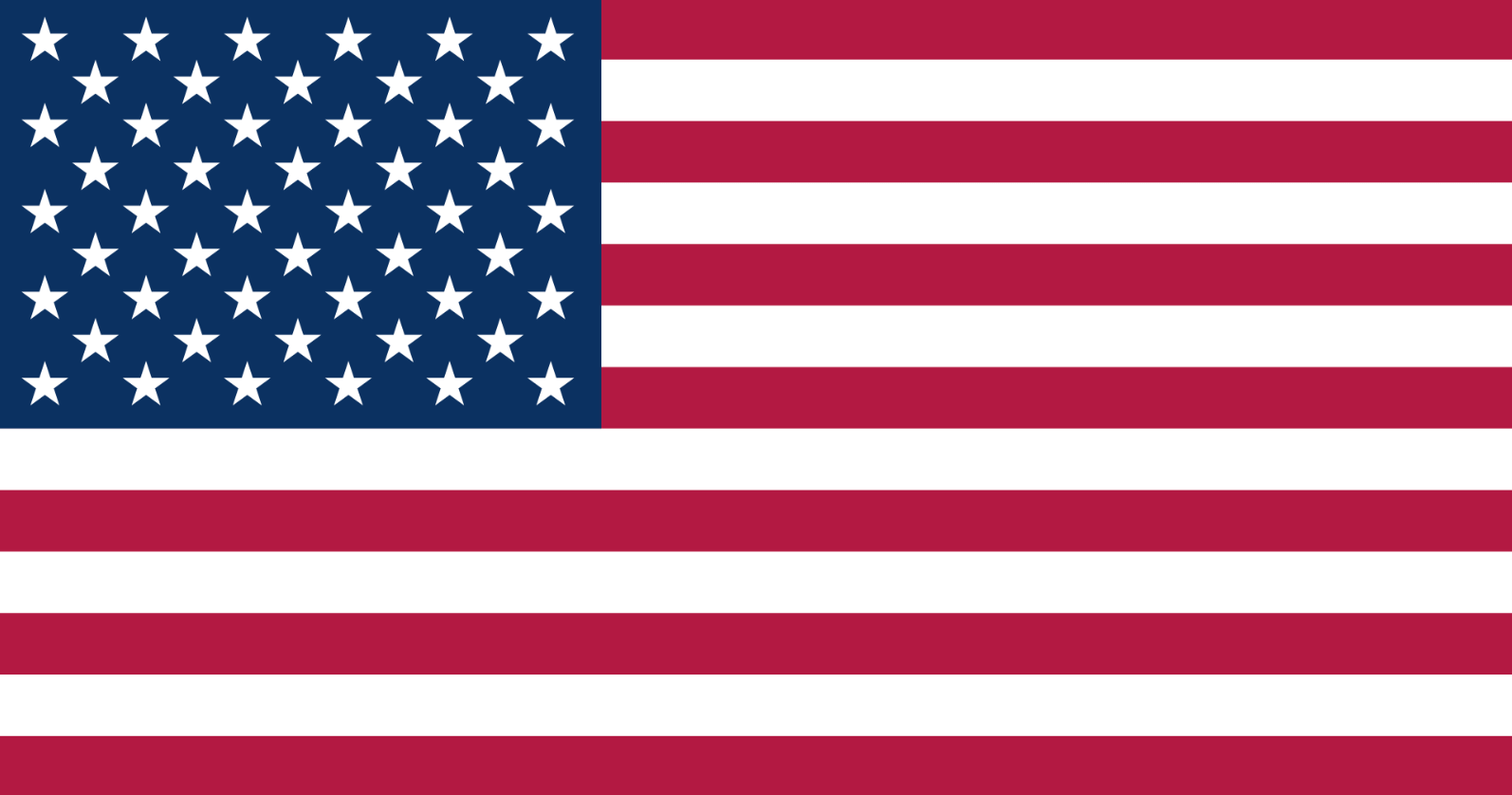
I do not believe, ultimately, that any state’s claim to sovereignty is legitimate. I take the Westphalian order to be, if we’re lucky, a transitional phase, in itself still woefully backwards and irrational, on the way to a universal, cosmopolitan, perpetual peace; and, if we’re not so lucky, as the obscene flatus vocis that pompous men have delighted in emitting in these few final centuries of our planetary tenure. To this extent, if I acknowledge that I am a proud American at all, this pride is entirely wrapped up in the fact that my grandfather was an avatar of George Washington, and not in the fact that my country can, if it really wants to, kick your country’s ass (or at least end things with a double KO).
My belonging is of the old kind, the kind no less salient in nomadic societies than in sedentist ones, and what I’ve already described as the incongruity of this sense of belonging with the modern sense of patriotism might better be called an antinomy, one that weighs on my spirit every day, and only more heavily as I grow older and more world-weary.
On the one hand, it says, I know with absolute certainty that to invest so much as a drop of affective commitment in a state whose rulers would rather destroy the entire world than accept their own empire’s demise, who would take humanity and nature down along with themselves and their regime, out of animal spite alone, is really no more decent or fitting for the human spirit than to find oneself tragically in love with a psychopathic abuser. Our current world order is psychopathic, and to take the claim to sovereignty by nation-states as legitimate, to take the psycho-pimp-warlord who claims to be protecting us at his word, is to buttress this order and to remain under the terms of a murder-suicide pact that only desperate cowering creatures, not free human spirits, could ever accept.
I know all this sounds rather extreme, but I am a Christian pacifist and as I see it these statements follow, logically and inexorably, from my most basic convictions. In this regard I do not see them as “opinions”, but as the truth, which duty and conscience require me to declare.
On the other hand, there is something there, in America, that I love, just as surely as I love my grandfathers.
My ancestral patriotism is complicated by the fact that I have lived outside the United States for a very long time. Most recently, for the past 13 years, I have lived in Paris.
Things are not working out here, to be honest, as I had hoped. I certainly have no fellow-feeling at all with the American “expat” community, with its seemingly inexhaustible fondness for so many things about France that I either do not care about or actively dislike (long lunches, gastronomy, fashion…). At the same time I have utterly failed to assimilate, into French society in general, but, much more depressingly, into the academic culture that I imagined, at the age of 40, I was going to master in no time. I now find that culture completely repugnant, I see the very idea of trying to penetrate it as an utterly irrational waste of my limited time, and I laugh at myself of 13 years ago, who had such a ridiculous megrim in him as to aspire to become some strange imitation of a “French philosopher”, with that whole balletic performance of habitus that Pierre Bourdieu so perfectly exposed. Fuck that, time is short, and I’ve got work to do.
My certainty in this regard, and my commitment to my work, only grow deeper and clearer with each day. It’s the right path for me, but it is also, I admit, sad. I understand now, deep in my soul, those perplexed elderly immigrants I saw throughout my childhood in California, the ones who never learned the language, who relied on others, if they had others, to navigate their way through a social reality they simply accepted could never be their own. I do know the language, I carry on in it about Aristotle and Leibniz and Kant in front of captive audiences of French students, week after week, year after year. But other than teaching my primary engagement with French is reading Balzac and Proust and Madame de Sévigné on my very own couch. I can’t imagine ever switching to French as my primary language of expression. Sometimes I joke, though it isn’t really a joke, that moving to France has primarily been beneficial in improving my English — it has made me hyper-attentive to the millennium-long cross-channel hybridity of these two national idioms, and has enabled me so to speak to “Gallicize” my own language in ways that at least I find quite powerful.
Perhaps a better comparison is not to the old transplanted soul in San Francisco’s Chinatown, living out his days in a back room of his children’s dim-sum restaurant (my mom says that when she went there as a kid some of these old men still wore the plaited queue from the Qing Dynasty), but rather to the exiled Kurdish or Dagestani intellectual who spends his days in a brutalist Paris highrise apartment writing melancholy poems of the landscapes of his childhood. I walk by these fellows’ clubhouses sometimes — dingy, fluorescent-lit, with a TV mounted in one corner showing news in the language of their homeland, and a portrait of some deposed or imprisoned leader in another, they sit and play chess or dominoes with their co-ethnics, moustached, smoking. They’ve got even less of that French habitus than I do — but they’ve got each other.
I know I’m not actually in exile. I can go home. I do go home. Sort of. I mean, I cross the border and Officer Cisneros of the Customs and Border Patrol says “Welcome home”. Yet I’ve been away for so long now that it is as if I have become my own poor foreign cousin, marveling at the kitchens and showers of the Americans, and always wondering if I have what it takes ever to be let back in. I am now able, in a way that I think most Americans are not, to see the place as other do: as a looming and rather forbidding fortress, with incredible reserves of wealth and power inside.
At the same time, I carry that fortress inside me. It is more precisely, in my case, a Western American outpost, and I a living embodiment of the Turner thesis. I have often mocked the obscenely hypocritical practice of “land acknowledgments”, such as they are performed by the symbolic capitalist class, as the great Musa al-Gharbi calls it, throughout much of North America and Australia. But in fact these acknowledgments at the same time acknowledge the essential truth of the observation that our character was shaped, historically, by the conquest of a frontier, by the immeasurable violence that required, and by the historical forgetfulness that, once accomplished, was then required simply to move on. The Turner thesis, in this light, really is just a neutral expression of what in a more critical vein is articulated in terms of “settler-colonialism”. We blonde Californians really were shaped by a historical experience perhaps most comparable to that of the Voortrekkers. I myself am neither concerned to perform ritual public prostrations over this history, nor am I proud of it. But I do think that living outside the United States for so long has the salutary effect of enabling an American to see it for what it is.
Another lesson that life as an American in quasi-exile cannot fail to teach is just how American Black Americans and white Americans are. This is something it is particular difficult for white Americans who have not lived outside their country to see, with all its myths around race — reactionary myths and progressive myths alike. Black American culture is and always will be more legible to me, more familiar to me, closer to me, than, say, French culture of any social class or ethnic origin. The lives of my Black and Maghrebin neighbors here in Paris are almost entirely illegible to me. They talk about things I don’t understand — and these are for the most part the same things that my white university colleagues talk about. They are all united in their Frenchness, while I am on the outside. By contrast, I fly to San Francisco and I get on BART to go up through Oakland to the Amtrak station at Richmond and onward to Sacramento, and on the way a group of Black American teenagers sits down across from me — I understand every word. I don’t mean just the language, I mean the whole life-world from which the language pours. In this regard, to an expatriated American, it is hard not to see that the racism of poor white Americans, of the sort I witnessed in abundance in my earlier life, really is just the narcissism of minor differences — we are the same people.
Grandpa Von used to grumble when ads for the NAACP came on the television: “How about a National Association for the Advancement of White People?!” According to my father, his father’s last words to him, from his hospital bed at Kaiser Permanente, with the TV on just as it had been at essentially every moment of his life for the several decades preceding, was: “That Arsenio — he’s alright”. I don’t want to say this was an indication of any tremendous late-life moral improvement, but the fact remains that if by some improbable circumstance Charles Aznavour, say, had appeared on the screen above his hospital bed, Von would have given his very last drop of energy to reach for the zapper and turn that damned thing off. (My own father’s last words to me, incidentally, from his hospice bed at the veterans’ home in Barstow, California —and I’m not making this up—, were: “So long, and thanks for all the fish.”)
Another lesson I’ve learned in these years of quasi-exile: anyone, potentially, can be an avatar of George Washington. It does not have to be passed down to you through your grandfather. Recall here Herman Melville’s description of Queequeg: that he “was George Washington, cannibalistically developed.” To this extent, I’ve come to think, American universalism at its most lofty expresses a spirit that already in antiquity was associated not with any particular empire or other polity, but with philosophy — an abstraction to which I myself am bound, for better or worse, no less than to the abstraction that is America. Thus Seneca wrote of this tradition: “If there is any good in philosophy, it is this — that it never looks into pedigrees. All men, if traced back to their original source, spring from the gods.”
My Black and Maghrebin neighbors in Paris are here not because of anything that might plausibly be called the “French dream”, but because of the dynamics of collapsing empire. They know the acronyms of French bureaucracy inside and out, as I never will, but one seldom detects any romance in this — only brute geopolitical and migratory reality. Where else would one go?
In conversation with the very most down-and-out sans-papiers, at their squalid encampments beneath the 2 line near Stalingrad —the metro stop that is, named for the battle; the eponymous city has switched back to Volgograd— I have sometimes been asked if I can help these poor souls get “to Canada”. This is a place-name that is included in the old sense of “Amérique”, as when the divine Jacques Brel, in fact Belgian, sings of his “Madeleine” that she is “Mon Amérique à moi”. This pre-revolutionary sense of America, designating abundance and hope, still means something in the Old World.
I don’t know a damned thing about French politics. I gather Emmanuel Macron is still president, and that Candace Owens is still promoting the scurrilous idea that his beloved wife Brigitte is a man. As for any finer-grained details about this place, they come to me via the homepage of the New York Times, pre-packaged for American consumption. I try not to know anything about American politics either, but I just can’t help it. I know everything that happens there, even as I understand that none of it matters, that the day-to-day political life of that place is but a projection of Heraclitean flux over what is in fact an unchanging monolith of Parmenidean sameness. It really is just the same damned thing over and over again.
My own opinion of Trump, for example, has not budged an inch since 1985. He’s tacky. He’s embarrassing. What more is there to say? I suppose I could add, at least, that I see no greater betrayal of everything I love about America than for Trump to have invited FIFA and its army of young athletes to enter the fortress. To me Gianni Infantino is just as louche and unwelcome as any Caspian Sea oil tycoon whom we might also find making a hotel deal with the American president in exchange for a cameo appearance in his son’s music video. This is exactly the wrong kind of universalism, exactly the opposite in moral valence from the one Melville had in mind in identifying Queequeg to George Washington. It is just one more reminder for me, of the same sort that has been piling up for forty years now, that Trump’s idea of America is nothing like my own.
I suppose we do have some better accounting for Trump’s America in Melville’s other great novel, The Confidence-Man (1857). There the author reminds us that “in new countries, where the wolves are killed off, the foxes increase” — that is, if I may be permitted to interpret, you no longer have to worry about getting scalped, on the American frontier, but you do have to worry about getting scammed.
Sublimated into art, these distinctly American con-men really are something to marvel at and even to learn from, just as the great American bard Garrison Keillor acknowledged drawing so much inspiration in childhood from the fire-and-brimstone radio pastors warning of the torments of hell. It’s a cut-throat place, brother, and you’ve got to watch your back. But what a place to be!
I find, as we approach the semiquincentennial, that my mind is more alive than ever with visions of American civic revival. America, as I’ve said, is in one sense completely static, monistic even, and one should not indulge overly progressive fantasies of any permanent overhaul. It will always be overrun with foxes. Yet I do tend to think, now, that there are better and worse ways to manage the monolith and to draw out its more venerable potencies. I find I am particularly attracted to those political leaders and civic activists, such as our friend Danielle Allen, who understand that America is both tragically compromised and full of promise, and who are much more interested in moving it out of its present impasse than in litigating all the countless wrongs that have landed us there.
I realize it is perhaps a bit jarring, for someone who has just admitted that he considers the entire Westphalian order illegitimate, to begin, a few paragraphs later, expressing sincere hope for an American civic renewal to come. But as I said it’s an antinomy, and antinomies in their nature invite attempts at sublation. I think there could be a way of articulating a vision of American civic pride and commitment that cuts beneath any suggestion, even, of nationalism, or indeed of partisanship. It would be expressed instead in terms of communitarian belonging and of popular traditions eminently worth preserving.
I’ve tried to envision, in writing, some of what this might look like. For one thing, as I’ve said I think civic education should include popular musical traditions and folklore as central and load-bearing pillars of its curriculum. We need, that is, I think, to keep alive the idea of America much more as transgenerational epos, and much, much less as fortress.
Subscribe now with a special 25% reduction!

Great and cathartic piece. I looked up “ epos” and was told it means electronic point of sale. Noooo
Thank you! This is a piece I very much needed, a nudge enough to change the vector toward despond into something more reflective. Antinomies indeed!