

Continuing our occasional series of “Woman on Unlikely Pilgrimages” (see Daphné Tamage on the trail of John Fante, or the same en français), today we bring you Hadas Weiss on a very different sort of trail. Hadas is an anthropologist and the author of We Have Never Been Middle Class: How Social Mobility Misleads Us (Verso, 2019). But we know her mostly from Twitter, where we lurk under an anonymous identity you will never in a million years succeed in sniffing out (it’s obvious enough anyhow that we are not Alice from Queens). We have long delighted in what we see from Hadas there, which we suppose would have to be categorized as intelligent shitposting. And for almost as long we have wondered how she might sound in a longer-form essayistic vein. We knew full well that all too many Twitter geniuses have floundered and sputtered when coaxed over to Substack (early on, Substack’s founders did much in the way of active coaxing). Was Hadas’s Twitter persona, as they say, but a bit? Or was it a proper authorial voice? This was a question that could only be resolved by testing, so that is what we did. And we think you will agree with our finding: Hadas has a voice. —The Editors
The Hinternet Foundation is a California-registered 501(c)(3) nonprofit entity. Learn more about our programs here. Click below to make a tax-deductible donation!
1.
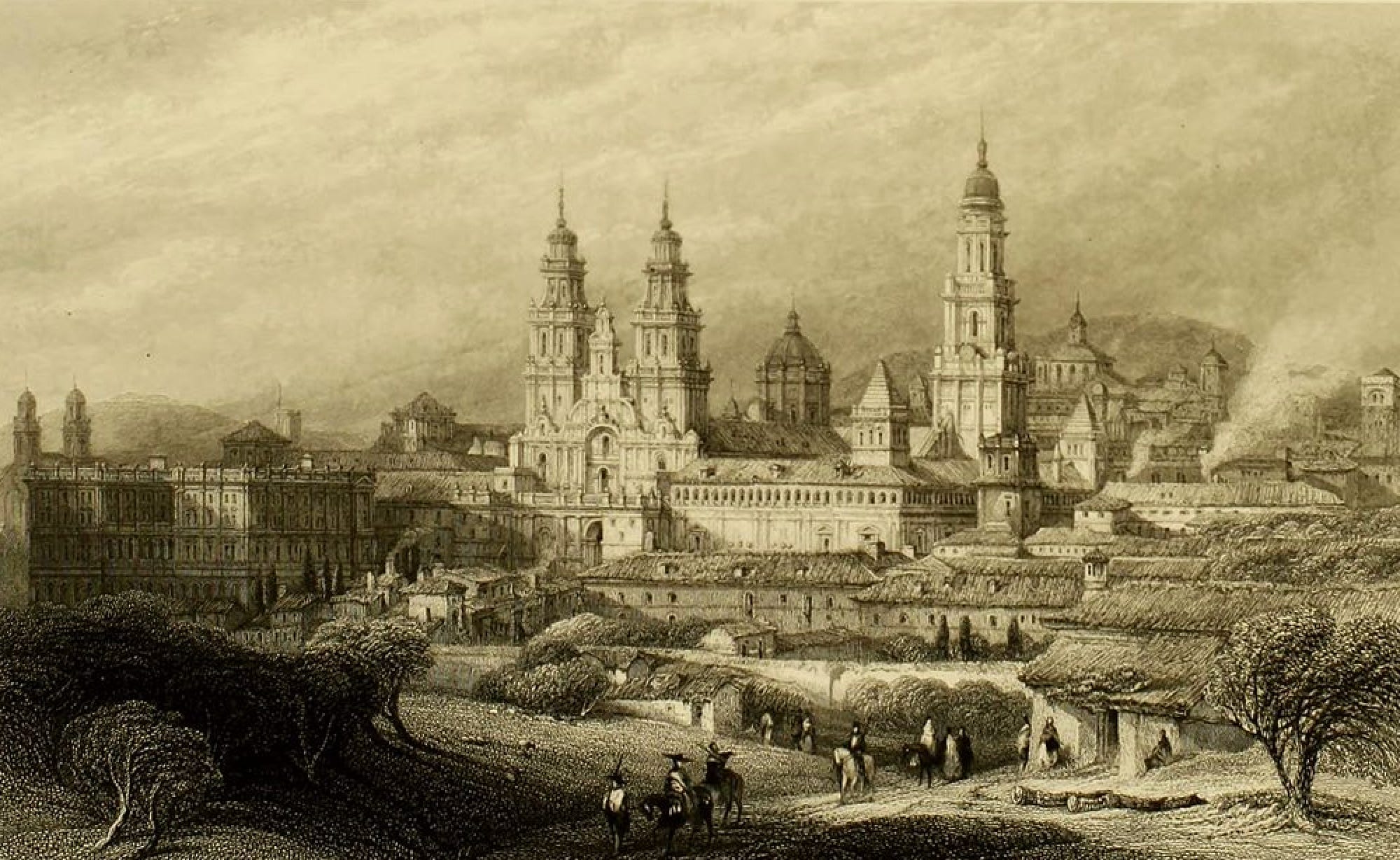
How far would you go to escape bad news? The answer for me was about 300 kilometers, by foot. And not just any walk, either, but a pilgrimage. The pilgrimage, if you’re Christian or living in Europe. The Camino de Santiago is a network of roads leading to Santiago de Compostella in northwest Spain, whose cathedral holds the relics of St. James the Apostle. Hundreds of thousands walk it every year, following in the footsteps of its medieval pilgrims, minus the poverty and hunger and dying along the way.
The bad news I was escaping was about my book manuscript. For months, I’ve been receiving a disheartening stream of rejections by agents. Finally, I’d given up and sent it directly to a few publishers willing to consider unagented manuscripts, where it would languish in slush piles. My confidence having taken a blow, I was anticipating rejections from them as well. Sitting around waiting for them wasn’t doing much for my mental health, so I thought: why not just go? A pilgrimage would be a good distraction and give me something new to write about. And who knows, it might even furnish me with a new perspective on life as a failed writer, at that point indistinguishable to me from a failed life. Living in Lisbon, the logistics were simple: if I took the Portuguese Coastal Route, I’d be back home in two weeks.
I discussed the plan with local friends. Most have already done the Camino and so have their next-door neighbor, their old high-school teacher and every member of their knitting circle. What they robbed me of in cool, they gave back in advice. I bought ear plugs, a sleeping bag liner, and good socks. I also watched movies and read books. The best-known movie about the Camino de Santiago is The Way (2010). It stars an aging Martin Sheen, walking the Camino with the ashes of his only son, who died on the same path. He’s joined by three pilgrims with issues of their own. They quibble and make up through such adventures as a near-robbery by a Gypsy kid, which leads to a Gypsy party, complete with a bonfire and fiddlers and sage advice from the kid’s father. It’s as cringe-inducing as every movie of healing and redemption you’ve ever seen. Needless to say, I cried.
Nothing prepared me, though, for the most famous literately depiction of the Camino de Santiago, The Pilgrimage by Brazilian writer Paulo Ceolho, of The Alchemist fame. I only skimmed it and, before you judge me, I defy you to read it word for word. I tried to evade even the skimming by asking ChatGPT for a summary and choice quotations, but it pulled some of those straight out of its ass. For example: “The simplest things in life are the most extraordinary.” Coelho’s actual words turned out to be far sillier.
The book is a fictionalized account of Coelho’s own Santiago pilgrimage, led by a mentor whose musings on life and love include “When you have an objective in your life [it] will turn out to be better or worse depending on the route you choose to reach it”; or the folksier “Miracles are very important, don’t you think?” Miracles do happen, attacks by talking dogs and whatnot. Coelho thinks what he’s looking for is a sword (don’t ask), but in reality he must find himself. Interspersed are spiritual exercises that beckon readers to join, for example: “Rise above and beyond the details of the problems that may be bothering you.” Coelho finally does and then insists that “the search for happiness is a personal search and not a model we can pass on to others.” What was all that for then? I wondered, having failed to rise above and beyond the problems bothering me.
I skimmed memoirs by other famous Camino walkers, such as Shirley MacLaine, who complains about a man staring at her braless breasts, and an unfunny bestseller by a German comedian that mysteriously increased the number of Camino walkers. I also skimmed memoirs from unfamous people published by vanity presses. I know because I’d gotten into the habit of checking where any book patently worse than my unpublished one was published. They weave through minor adventures like a painful blister, getting lost, wanting to give up but soldiering on — all about as exciting as your uncle’s 1980s vacation slide show.
The memoirs cautioned that you had to expect the unexpected and make yourself vulnerable, which sounded risky and unpleasant to me. As it was, I was hanging on by a thread. Vulnerability was supposed to lead to the transformation I sought for myself, but the lessons learned —to appreciate small things, to accept yourself— could easily have been picked up from a Hallmark card without walking a single step. Hell, they could’ve been picked up from Coelho’s book, or from a ChatGPT summary thereof.
2.
You had to procure something called a “pilgrim passport”, and get it stamped at the pilgrim hostels along the way, if you wished to receive a credential at Santiago. I found out that such passports were available at the Lisbon cathedral, which suited my sensibilities better than the idiosyncratic mail-order alternative. When I got to the cathedral, I was directed to a booth selling religious trinkets. I proclaimed grandly that I wanted the pilgrim passport, as I was about to embark on a pilgrimage. Barely raising her eyes from her phone, the saleswoman said, “two euros.” It gave me my first inkling that I would not, in fact, be the pilgrimage’s main character.
I took a bus to Porto, spent the day with a local friend, and set out early the next morning. The trail was set with wooden planks at first, snaking through a picturesque landscape. There were trail signs with explanations on biodiversity that I lacked the patience to read. The air was fresh, the day bright, and locals greeted me with a handwave and a bom caminho. I was all but skipping, pausing only to send photos to family and friends and to post quips on Twitter, having promised to live-tweet my pilgrimage. A friend wrote “that’s the happiest I’ve ever seen you near a beach.” Another commented that I was off to an early start, to which I replied: “That’s how I win.”
A few hours in, it grew notably less fun. My shoulders ached and my back and legs grew sore. I thought everything in my backpack was indispensable when I packed it, but now more and more of its contents seemed highly dispensable. I forwent my favorite snacks, but I still made some rookie mistakes. The sunscreen was one: thinking I’d need a lot of it, I bought a family pack. People snickered at its size every time I pulled it out. When I offered to share, one person said, “You’d like that wouldn’t you.” The condoms, too, remained unused, but they didn’t weigh as much, except on my ego.
At the first pilgrim hostel, I spent a long time talking with an outgoing American walking with his reserved son. It was something “spiritual, ya know?” that they could do together before the kid went off to college. Then there was a Canadian couple that shuddered when I asked them if they were also from the USA. There were also lifelong friends from the UK who had been through so much together —studies, marriage, the birth of their children, the empty nest— that they wanted to share this, too. One of them was under the weather and I offered her ibuprofen from my stash. “Oh, I would never put that poison inside my body,” she said, “but that’s very kind, thank you.”
Early the next morning, as I prepared to head off, a Ukrainian woman I’d also talked to the previous day climbed out of bed. I asked if she wanted me to wait for her and she said no, she would have breakfast first but maybe we’ll see each other on the way? Sure, I thought, if you sprint and I die. I did see her on the way. It was after I got lost trying to track down a coffee shop that turned out to be closed and spent over an hour backtracking.
The Camino paths are well marked, and you can also track your progress on the “Pilgrim Ninja” app, as pilgrims across the centuries have done. But the people who claim that you cannot get lost on the Camino de Santiago have never met me. I have, in fact, gotten lost on multiple occasions, for example when walking right up to a bright yellow arrow pointing left and then turning right because of a condition I have whereby I don’t see things that interfere with the scenarios in my mind.
On that second day of walking, I developed a limp. It caught me by surprise, but I knew what set it off. When I was nineteen, I toured some caves with a group. You had to jump to get through one of them, and I, with my fear of heights and general cowardice, volunteered to go first and smashed my right foot. Not wanting to make a fuss, I agreed that we should go see a lookout next. By the time I got to the hospital, my foot was so swollen they had to wait a few days before fastening the dislocated bones with screws. In the end there were no lasting effects, and I had long put the incident behind me. But the foot must have been retraumatized on the Camino. It swelled and sent little jolts of pain whenever I stepped on it.
A German named Dirk was already there when I arrived at the next hostel shortly before the 2pm opening time. He’d been walking for a couple of weeks already, from the South of Portugal. When I told Dirk this was my second day on the pilgrimage, he regarded me with a look I couldn’t make out. It would come into focus only later, after seeing it repeatedly: the serious pilgrim’s scorn for the slacker counterpart. I found it comic until about ten days into the pilgrimage, when I saw people who started walking a day earlier from a place so close to Santiago they may as well have been parachuted down to the cathedral. I and the woman I was walking with commented on their fresh clothes and tiny little backpacks with hyperbolic disdain.
Since Dirk was so seasoned, I asked him if a hostel was ever full when he got there. Public pilgrim hostels are first-come first-serve, and are known to fill to capacity. It was a nagging concern for me and one of the reasons I set out at daybreak. No, Dirk said: he was cautious and always arrived before the opening time. He showed off his log listing every place he stayed with precise arrival and departure times (“I like zingz organized”). I found it only a little bit ridiculous. The fact is that people like Dirk and I would be guaranteed a spot and get to choose our beds, while loser pilgrims had to settle for top bunks.
I walked the standard twenty-some kilometers per day, sometimes with others but, as my limp slowed me down, mostly alone. I didn’t mind as there were always people to chat with while slumping on rocks or fueling up at coffee shops. Early afternoons at the hostels, a shower and then food, either in the hostel kitchen or, after crossing the border to Spain, a sumptuous set-menu lunch at a local restaurant. Evenings, I spent at the hostel communal space, online or chatting with whoever was there. Then, early to bed: lights were out by 10pm and the chorus of snoring and farting began.
There were few amenities on the Camino and no privacy at all. Clothes were handwashed, toilets and showers shared, and sleeping was in dorm rooms on plastic mattresses. Outdoors it was raining or sweltering, indoors loud and stinky, the body tired and sore. And I had a blast. I say this as a set-in-her-ways homebody with no attraction to nature and limited social batteries. Still, I was happy on the pilgrimage every day. Downright chipper, humming tunes and cracking jokes.
3.
It did me good to distract myself from my manuscript, but there was more to it than that. The very act of walking towards a destination —which is all a pilgrimage boils down to— was salutary. You wake up in the morning and you have one job. You’re always making linear, measurable progress. It may not be easy on your body, but you don’t want it to be. Whatever your reasons for doing a pilgrimage, if you’re expending unremitting physical effort, it has to be meaningful somehow. Each day is a challenge met with its little celebrations and preparation for the next day’s walk. I had no problem imagining Sisyphus happy.
The limp, too, made me the object of attention, of which I cannot get enough. Are you okay? Can I help? I was offered painkillers and other remedies. A Dutch guy suggested sheep’s wool, and I agreed just to see what would come out of his backpack. Turns out he meant actual sheep’s wool. He tore out a piece to place against a pressure point and, lo and behold, it did nothing for the pain. A French woman found me a branch to use as a walking stick. It was huge and gnarly and twisted, making me look like an evil pilgrim on her way to worship Satan. I tossed it after she disappeared because I needed my hand for that far more important crutch — my phone. Many praised me for pushing through the pain, which I accepted with proper humility. Then, a few days in, I was upstaged by a pilgrim with a prosthetic leg. I never saw him, but I heard about him plenty. Him again, I muttered every time he was mentioned.
About halfway through the pilgrimage, it struck me that I still hadn’t discovered a new perspective on life. All I had were my problematic old ones. I needed to be more deliberate about it. As I set off the next morning, I was laser-focused on my predicament. My book might never get published. Could I live with that? No, no, I would die. But, okay, probably? If it came to that, though, how would I distinguish myself? As my aching foot reminded me, I was as needy now as I was at nineteen, jumping in a cave and suppressing the pain for everyone to see. Or maybe I could become one of those self-validating people, instead. How, though?
A couple of days later I met exactly one of those people: a thirty-something seminarian from the Midwest named Kyle. I’d never met a seminarian before, and I had questions. I swear they were more than just about taking the vow of celibacy (not a problem: he believed in love shared with God and the community). How he decided to become a priest was one. He heard the call when he was thirteen, he said, but resisted it: nothing in his upbringing would have led him to it. His parents were opposed, as was everyone else in his life. To please them, he went to medical school, then dropped out as the call grew louder. Now it was strong enough that he no longer needed anyone’s approval. He knew he was on the right path.
“But are you 100 percent sure?” I asked, because I’m never that sure about anything. He was. I said I was jealous and shared my publishing woes. Kyle said he knew how I felt but proved otherwise by adding that if I was meant to be a writer, I would write no matter what. My distress wasn’t about writing, though. It was about publishing, wishing to inhabit that larger and more interesting world of published writers. Not being admitted to it felt like limping along a well-trodden path whose protagonist was a guy with a prosthesis. I could hardly say all this to redeemed, needing-no-one’s-approval Kyle, though.
4.
I read a beautiful essay in preparation for the pilgrimage by Polish sociologist Zygmunt Bauman, about the pilgrim as a symbol of modernity. In contrast to the experience-seeking tourist, the pilgrim is a pursuer of truth and constructor of identity. And since truth and identity always resided elsewhere —projects whose realization required ongoing effort— the person who sought them had to walk and then walk some more. For Bauman, the pilgrimage was an oblique assertion of our inadequacy and incompleteness, a projection into the future of a protean and ever-unfulfilled ideal self.
But if that were so, wouldn’t you need milestones indicating that you were on the right path — in case, I don’t know, you strayed for coffee or were too self-absorbed to spot an arrow? God knows I meandered plenty. Since He wouldn’t disclose my destiny to me as He had for Kyle, I relied for guidance on family and friends, on my colleagues and parasocials, and on people who didn’t know me yet but maybe one day would, if I ever had something to show for myself.
In the beginning of the pilgrimage, I took pictures and shared them, but they’d grown too tedious even for my family’s WhatsApp group. Then I saw a woman taking pictures of the coastline and I asked her if she wasn’t sick of it already (the Coastal Route is called that for a reason). She said: “No, and I live on an Island!” She meant one of Portugal’s Azores. She introduced herself as María. “In Portugal, when in doubt about a woman’s name, just say María and you’ll almost always be right.” She was walking alone after chucking a group with an overbearing leader. Alone was definitely the way to go, but she might repeat the pilgrimage next year with her two adult sons, “because they do as they’re told.” I wrote all this down after we parted ways, as I had with every amusing conversational snippet.
One morning I met Miguel from Mexico. I asked if I could join him because it was still dark out and he had a headlamp. He said yes and then proceeded to get us both lost (he didn’t notice the arrow, and I did this little thing I do when I’m with other people, namely cede all responsibility to them). As we backtracked, I confessed that I’d used Google Maps the other day to shorten the route and he didn’t judge me. Miguel had been walking since Lisbon and met a bunch of evangelicals on the way. He said the Camino was like Christian Tinder for them. This rang true to me: I’d also shared a coffee-shop table with one who was walking with a sexy tattooed lady he met on the way. He said they’d been up half the night because of a loud snorer at their hostel who’d got people so crazed that they were trying to shush him from the other end of the room. I shared the story with Miguel, who said: “oh, the snorer,” like this was a celebrity.
I also walked for a stretch with an American whose Camino app glitched. “It keeps telling me I’m in the wrong place,” he said, and showed me the screen. He was right — the app showed him so punitively far off the trail that I suggested he searched his soul. He was the only one I could keep pace with at that point, only because he paused so frequently to take pictures and make videos. While we stopped for coffee, he showed me the videos he took of his latest trip. I was eager to get going again but there were still more of them. “Don’t worry, I won’t bore you much longer,” he assured me. I’m nothing if not agreeable so I said: “Don’t be silly.”
One morning I caught up with a 20-year-old Briton whose fish tattoo I had admired a couple of days earlier. She told me that her mother hated it, which made me fear she pegged me as being of her mother’s generation. I probably was, but I didn’t like her thinking it. When we met again, we spoke about blisters. I know I’d mentioned that they were boring to read about in the memoirs but here’s the thing about blisters: when you have them yourself, they’re a fascinating topic of conversation. She said a woman at her hostel had cut her pilgrimage short and flew back home because her blisters got infected. “Ugh, if that happened to me, I wouldn’t tell anyone,” I said. “I know, right?” she said. “Cringe.”
A Korean woman had been walking for sixty-six days when I met her at a hostel. She started in Switzerland, had already been to Santiago and was now walking down to Lisbon. She was a bundle of energy and told anyone who cared to listen that it was thanks to fresh fruit. She loved fruit and it was so much cheaper in Europe than in Korea. Every day she bought a load of it, all different kinds, and ate it on the way.
The next morning I started walking with an Italian named Francesca, who turned herself into the most popular pilgrim on our route by randomly distributing Kinder chocolates. Whenever she was not around, people would ask, “Where’s Francesca? Has anyone seen Francesca?” Francesca told me she heard a noise from the bathroom early that morning. She went to check and saw the Korean lady vomiting her guts out. We snorted: all that fruit!
My arrival at Santiago would have been anticlimactic had I not already read so much about it being anticlimactic that I was expecting zero climax. The hostel here was better, as I was to share a room with two people I already knew: Kyle the seminarian and Miguel from Mexico. Kyle said there’d be a special mass for pilgrims at the cathedral that afternoon. After a shower and food, Miguel and I went to check it out, but stayed for all of five minutes because it was boring. Then, over drinks, Miguel told me about his recent personal crisis. He was doing online therapy twice a week now, even during the Camino. He connected with his inner child and it changed everything: he was nowhere near as insecure and needy as he used to be.
He also had a different pilgrimage experience than I did, having laughed and cried almost every day. It made me feel like I’d missed out, never having been nearly so overcome by emotion while walking. “Because you weren’t really looking for it,” Miguel said. “You can’t both have the emotional intensity and stay inside your comfort zone.” He was teasing me after I said therapy wasn’t for me, as it would force me out of my comfort zone, which I like on account of the comfort. He said he couldn’t understand how I could write a whole-ass book without digging deeper inside myself.
5.
I told Miguel that my book was supposed to be funny, and he saw right through it. Not leaning into pain was a mistake, he said. I might get a laugh, but then people would move on to the next joke and remember nothing. Comedy was a defense, it’s also what kept me from discovering precisely the new perspective I was after. All I’d gained was a two-week respite. I would return home as needy as I was when I left. I suspected he was right, though I’ve never been unaware that things could get worse. Better funny and needy, I felt, than serious and miserable.
The next morning, I filled out the details of my trip and waited in line at the pilgrim’s office. Finally, a clerk checked my pilgrim passport, now full of stamps, and then handed me my pilgrim credential. I thanked her and paused with an ear-to-ear grin until she clapped good-naturedly. Before I left, I had someone take my picture to share with family and friends and to post online.
The plaza in front of the cathedral was full of pilgrims, and I spent the next hour eavesdropping on their conversations. A few compared routes. “Oh, so you were taking it easy,” said one to another who clearly didn’t think he was. Two women spoke about how their walking shoes had been too small and they had to buy new ones on the way. They showed each other the bruises on their heels like Cinderella’s ugly stepsisters. One man was giving his family a blow-by-blow account of his walk. I stopped listening when I realized it was going to be longer than the actual pilgrimage. A couple of pilgrims had just arrived, sweaty and dusty. Pausing to observe the cathedral, one of them asked if they should go inside. “Nah, fuck that” said the other.
Then I saw Kyle. He was on his way to a debriefing for newly arrived pilgrims, and I asked if I could tag along. We arrived just as people pulled up chairs in a circle. They shared their experiences in the kind of religious language I hadn’t heard at all during the walk. Kyle must have been in his element because when his turn came, he spoke with unusual confidence. He was lonesome at first, he said. Everyone but him was walking away from something rather than towards something. He was walking for people he knew but found the responsibility daunting, given the lives those people led. Then he prayed on it and realized that all he could do was offer himself to God on their behalf.
I slipped out after the debriefing to avoid him. I liked him so much the first time we met, when he was normal and self-effacing, but this! Was this where not being needy got you? God might make you more secure but at least insecurity forced you to pay attention to people who could alert you when you went off the deep end.
Miguel was at the hostel when I returned to pick up my backpack. I told him I had received my pilgrim credential that morning and that it was fun; the clerk had clapped for me. “No one clapped when I picked mine up,” Miguel exclaimed. “Because you weren’t really looking for it,” I shrugged.
While waiting for the bus back to Lisbon, I spent quality time on my phone, going over the likes and congratulations for completing my pilgrimage. I knew rejections were forthcoming too, and I failed to gain insight as to how to handle them. Still, at that moment, I fully appreciated the small things. I pulled out my notebook and pen. Returning home as I’d left it also meant returning to comedy, defensive as the impulse surely was. “I’ve risen above and beyond the details of my problems,” I wrote. “Don’t ask me how though. The search for happiness is a personal search and not a model we can pass on to others.”
The Hinternet Foundation is a California-registered 501(c)(3) nonprofit entity. Learn more about our programs here. Click below to make a tax-deductible donation!

 | A guest post by
|
What an awesome adventure
Beautiful