

The Voynich Manuscript: A Translation
Part Three: Manuscript Pages 9-14
Part One, a translation of manuscript pages 1-3, is here.
Part Two, a translation of manuscript pages 4-8, is here.
High-resolution images of the entire manuscript are available here (Beinecke Rare Book & Manuscript Library, Yale University, ms 408).
Page 9
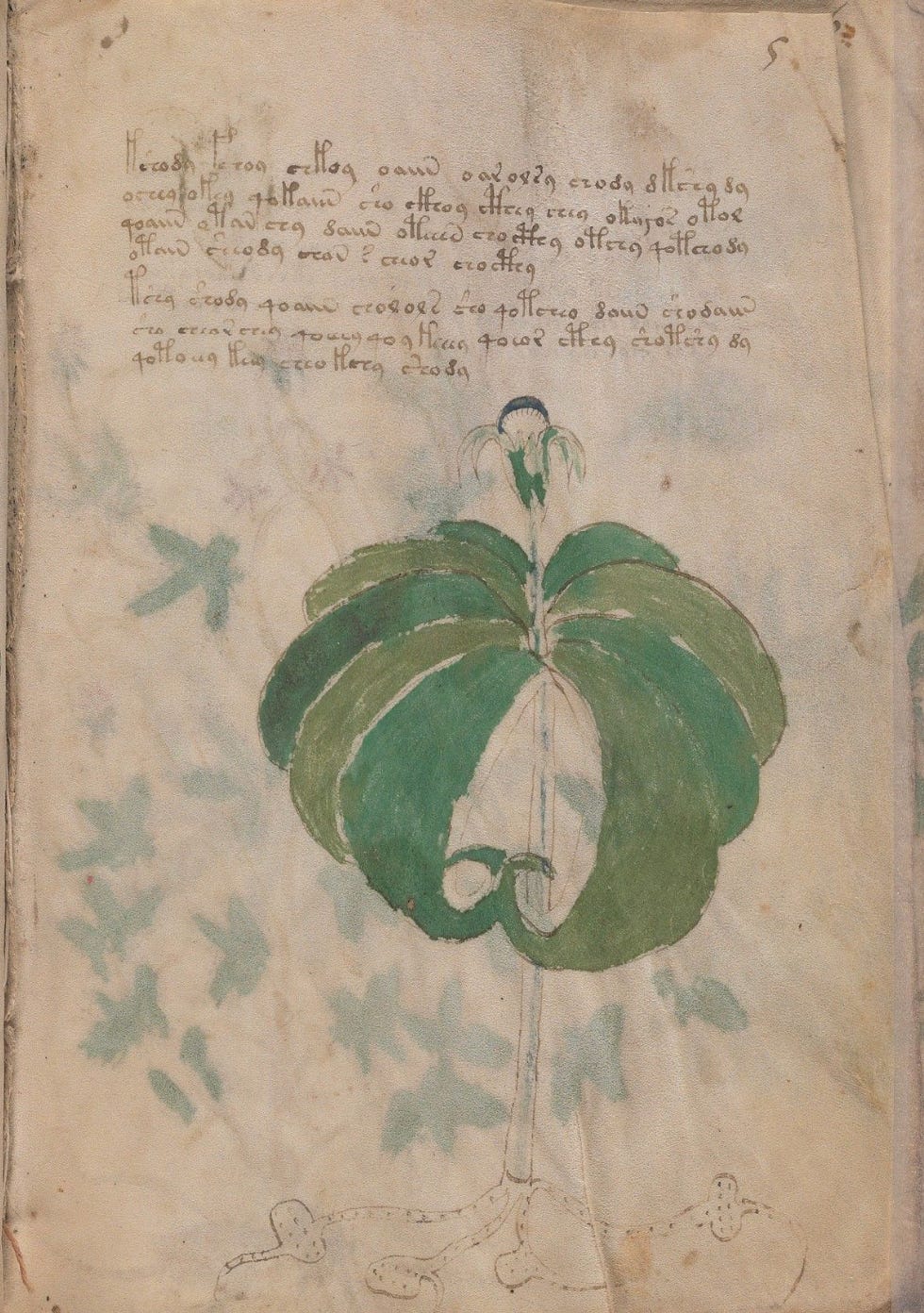
I was only a young man, yet I distinctly recall the unease I felt when the Glaziers emerged as the City’s most revered class of men. They set about pouring sand into their furnaces, devising new ways to make glass as thick as bricks yet as translucent as air. No one could have imagined before their efforts began what wonders may be conjured out of heat and silica, ingenuity and persistence.
We live beneath glass here in the City, all the time, but we are reminded of this in practice only when we attempt to walk away from it, or when, as happens several times a day, we hear the sad thunk1 of an oblivious bird, and then look up to see it sliding down the invisible slope. And of course we are constantly reminded of the dome by the Glaziers themselves, who have by now made it official doctrine in the City that there are twenty-seven celestial spheres in all,2 the closest of them being the one they themselves built, which, they insist, shares in the same nature as the most distant and empyrean of them all.
Page 10
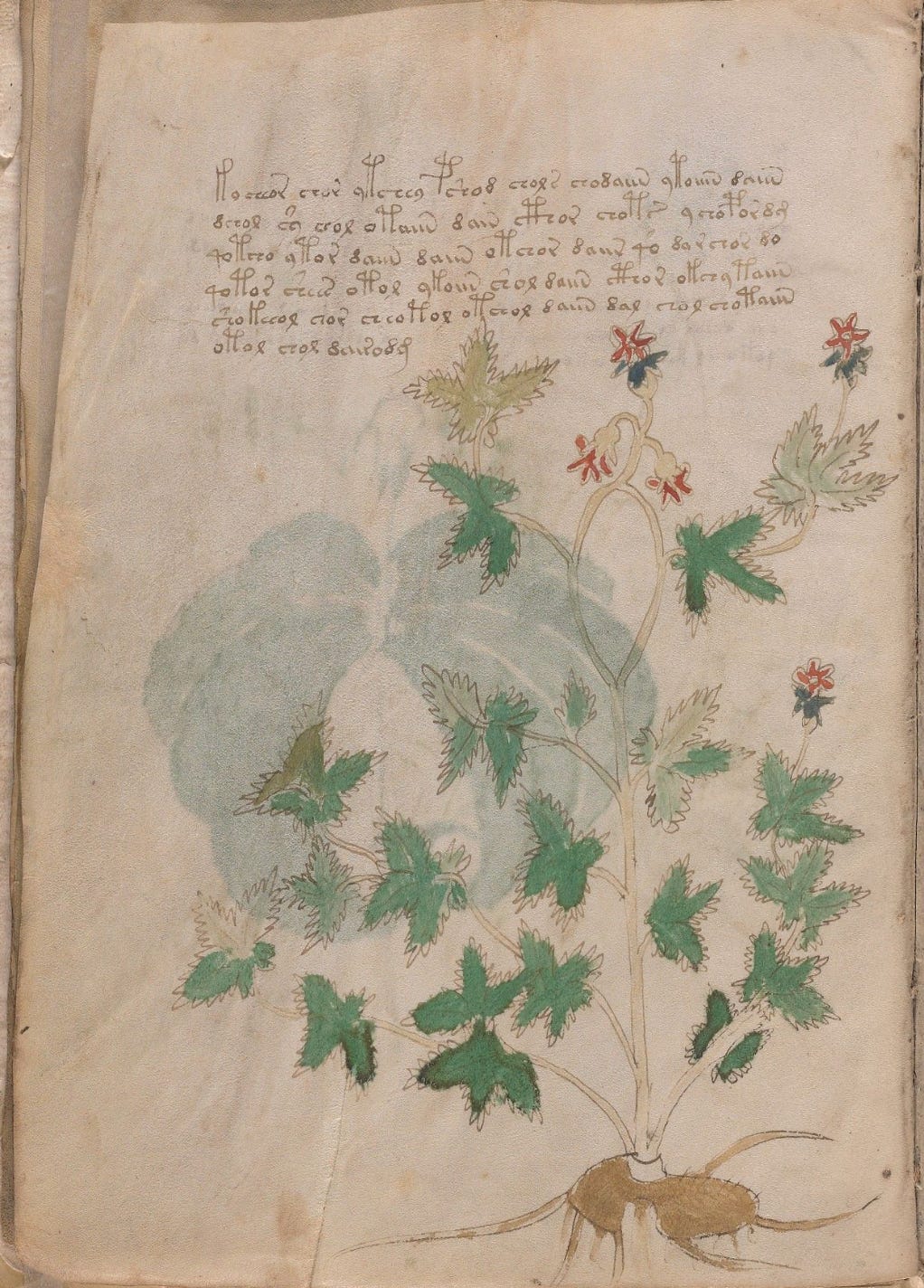
The children of the City —can we even call them that? anyhow the Citizens generated after the construction of the dome— do not know that it was constructed at all. They believe it is as fixed and eternal as the other twenty-six spheres, and that it is paired, beneath the ground, with a complementary hemisphere invisible to us. But you cannot erase the memories of those of us old enough to have been here before its construction. You can kill us, which seems to have been one of the strategies Cocalus considered some years back, though in the end he understood he needed us for our expertise in sundry fields, such as mine, in botany.
Page 11
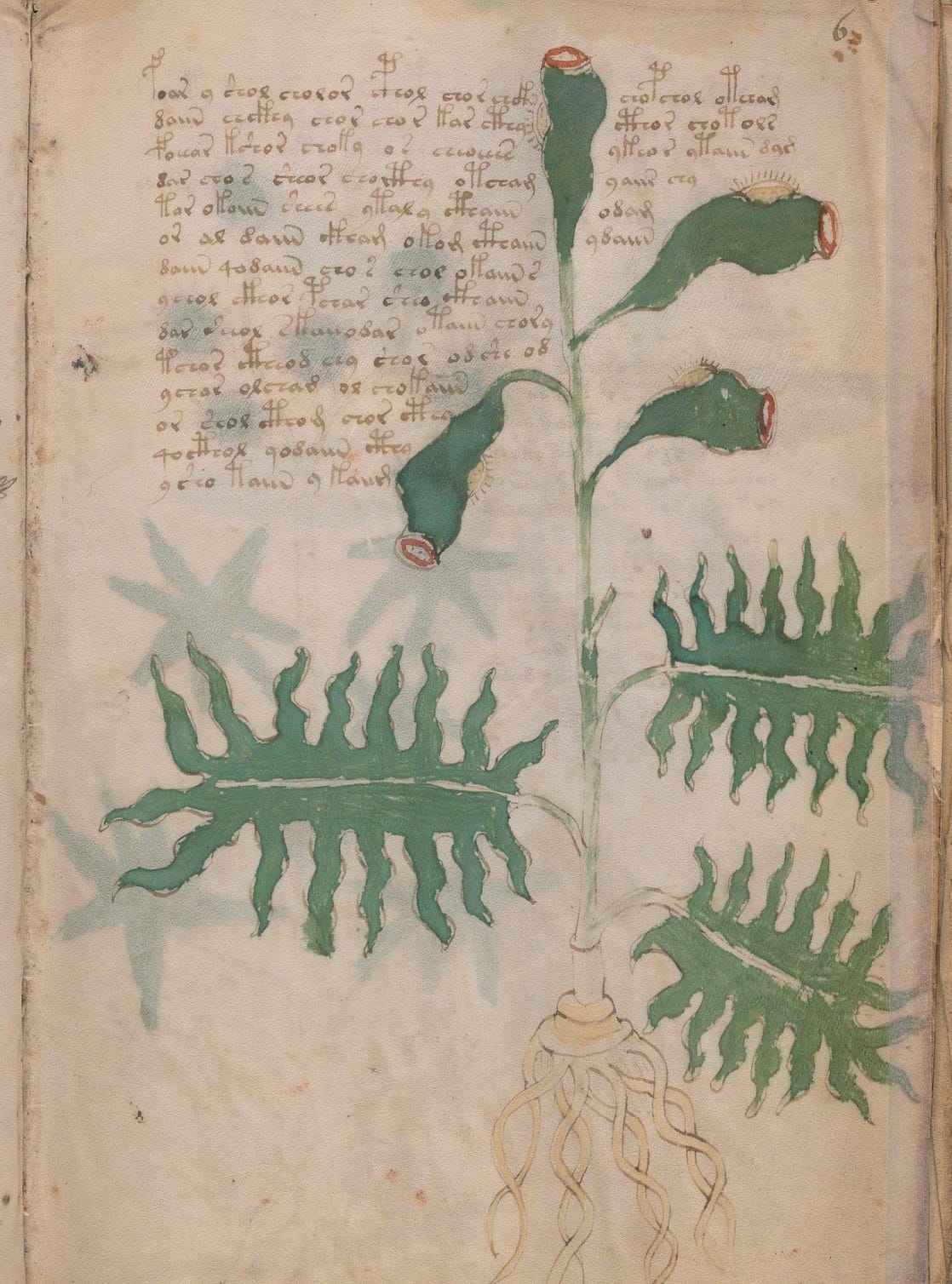
We are permitted to live, on the condition that we silence ourselves in the presence of the hatchlings (as I’ve taken to calling them). A few years ago one dour little androgyne of ten or so came to me to ask how, as it is rumored, I can know the patterns of the zodiac on the reverse side of the dome, given that there is no way to travel out of the hemisphere within which we are generated and corrupted.3 This was during the “great thinning”, and straightaway I suspected a Glazier had sent him to trick me into betraying my knowledge, for which I would have faced certain death. Glaziers are never to be trusted, given the favor Cocalus extends to them, and least of all when the Citizens’ numbers are being thinned on his express orders, in view of some supposed need for what the Glaziers call “equilibrium”. I therefore could not tell the hatchling that its question was doubly misinformed: for we do not know the shape of the zodiac on the other side of the world (which in the old geography is nothing other than the Antipodes4), while there most certainly is a way out of this dome-covered City of ours. I know the way well, and someday I will find the courage to take it.
Page 12
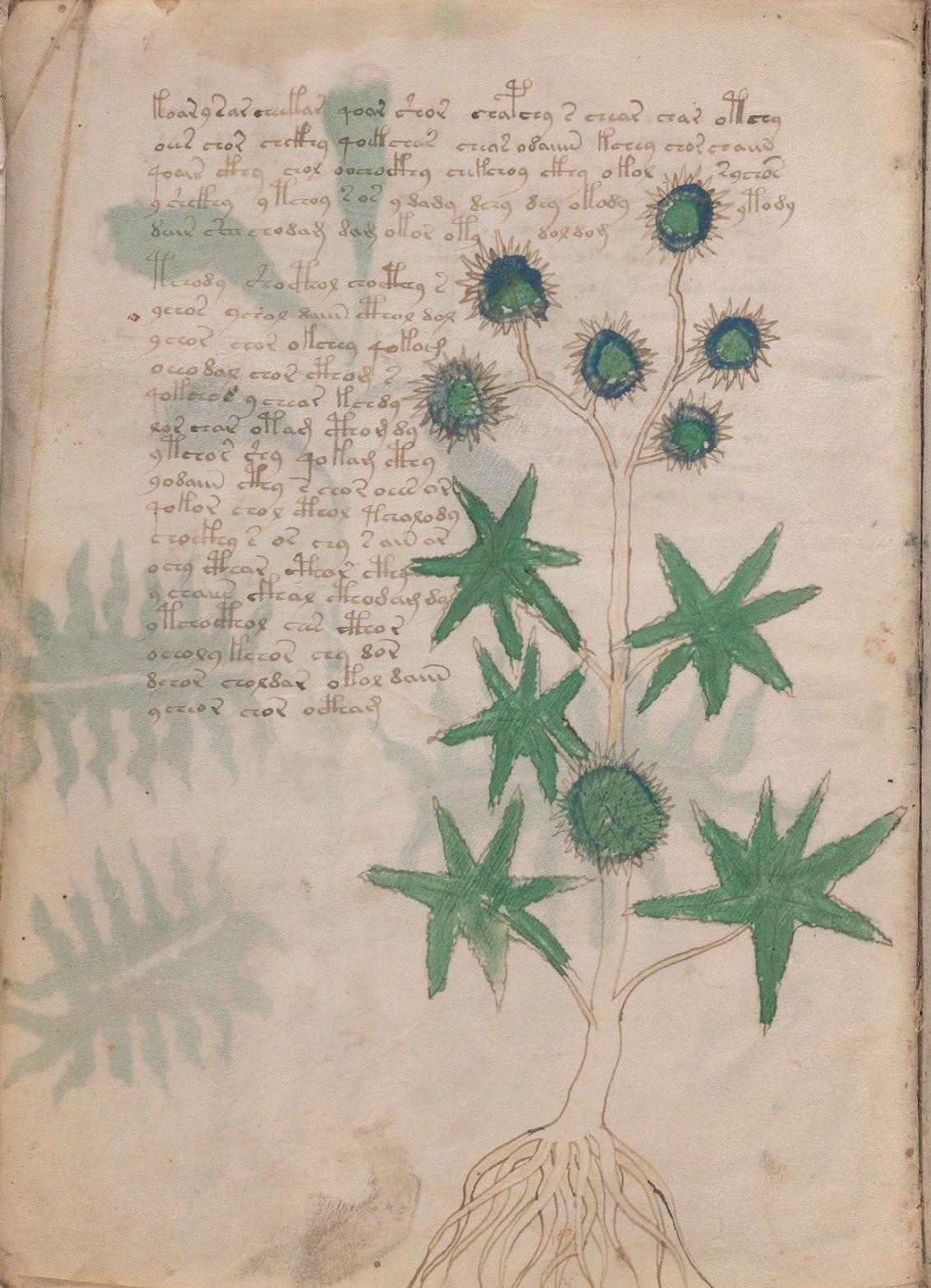
There are, more precisely, two ways. The first is obvious, though the hatchlings would never think to consider it: the dome penetrates only six ells5 into the ground at its deepest. One could easily dig under it within the space of a dark night, provided one were careful to avoid the wolf patrols (or whatever the beast-keepers are now calling their cross-bred monsters; that is not my concern, as I am a botanist and know only of plants, and of the insects that aid and harm them).
The other way is through the baths, which even the smallest hatchling knows to bubble up from deep thermal springs.6 But the rites of generation and hatching that occur there are so codified, taking place only at the surface, so that no one in these many years has bothered to plunge into them just ten ells or so down, to find the many passages leading to caverns filled with dark pools and dank air, great calcitic foyers shot through with openings, leading out in hundreds of different directions, some of them dead-ends, but many opening up on the earth’s surface well beyond the City. Even among the elders this is not common knowledge. My blood-brother Cacus knew, and he knew I knew, because we used to explore these passageways together as boys. But Cacus was thinned. Cocalus having decided on the name of the mythological cow-thief for my friend,7 he subsequently decided that this name he himself made up must be reflective of a bad character — and now I am the only one left who knows. Well, I and Cocalus, but he does not know that I know.
Page 13
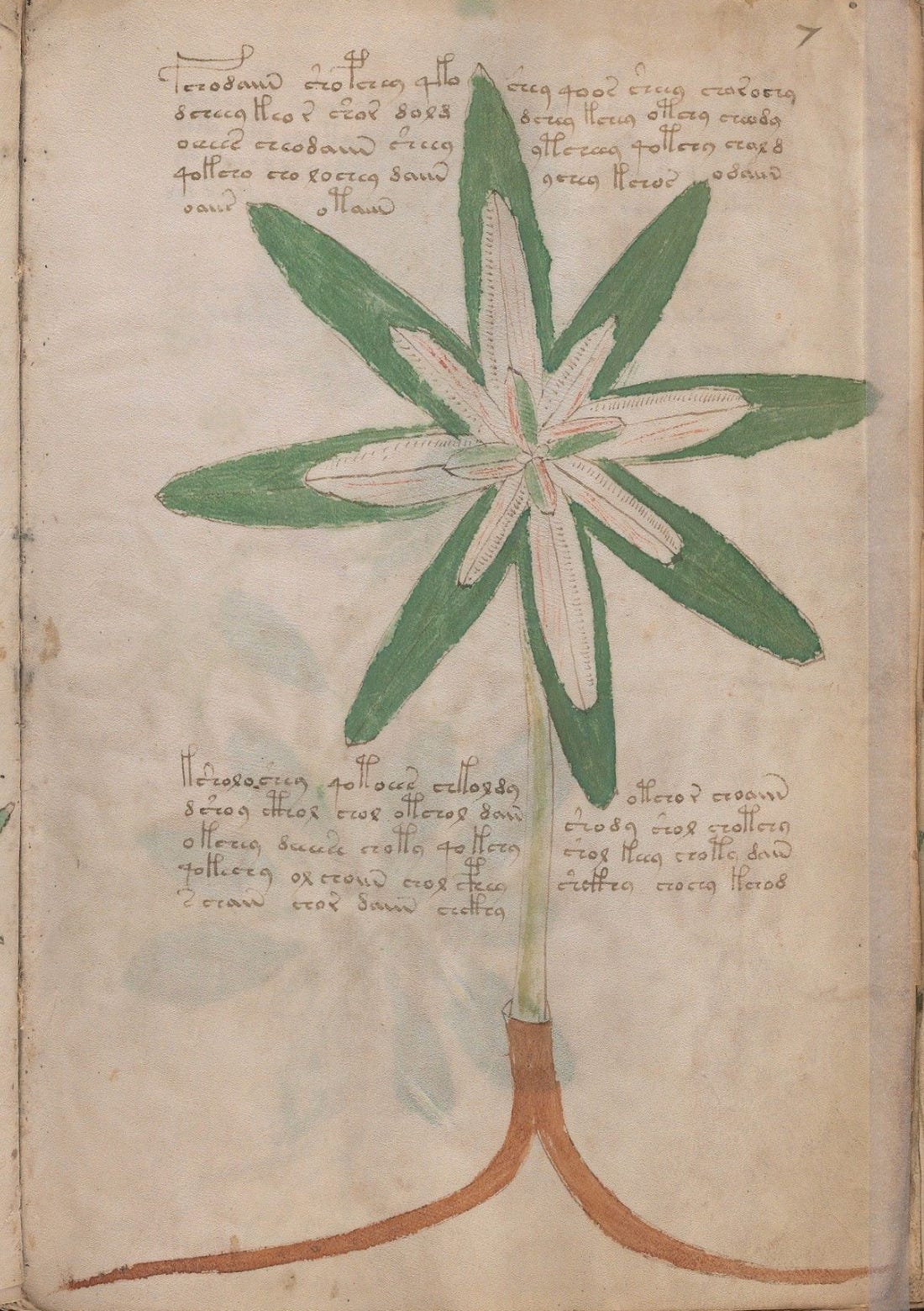
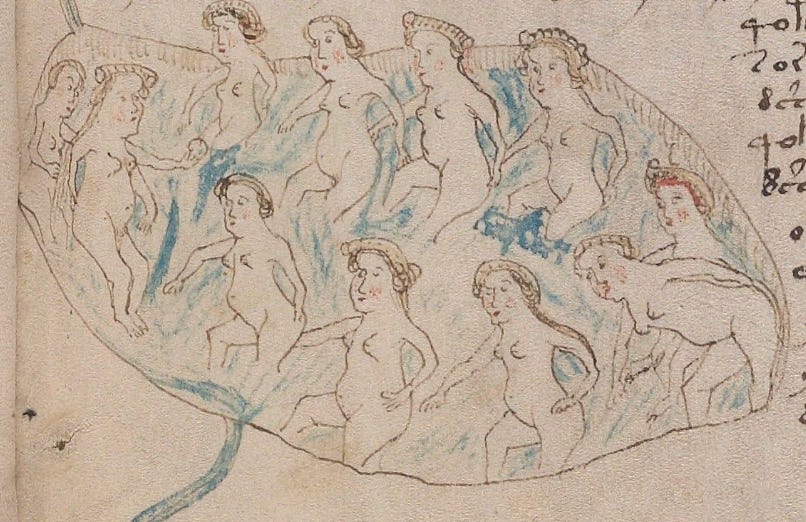
Surely you do not need to know all these details, my Goddess. Let us reminisce instead, for that is far more pleasing than to learn the layout of our City. Do you recall our visit to the baths at Montecatini,8 where out of decorated spa-cups the plague victims drank the earth’s hot mineral broth in desperate hope for a cure?
I was a fool, my Love — I thought the very fact that you were beside me was enough to keep me safe. And I suppose there is no evidence it did not, for I did not fall ill, nor did you, but we both stripped bare and floated arm in arm, naked, like lily-pads in the hot baths at night, when the sick had all wandered off to sleep or to die.
Page 14
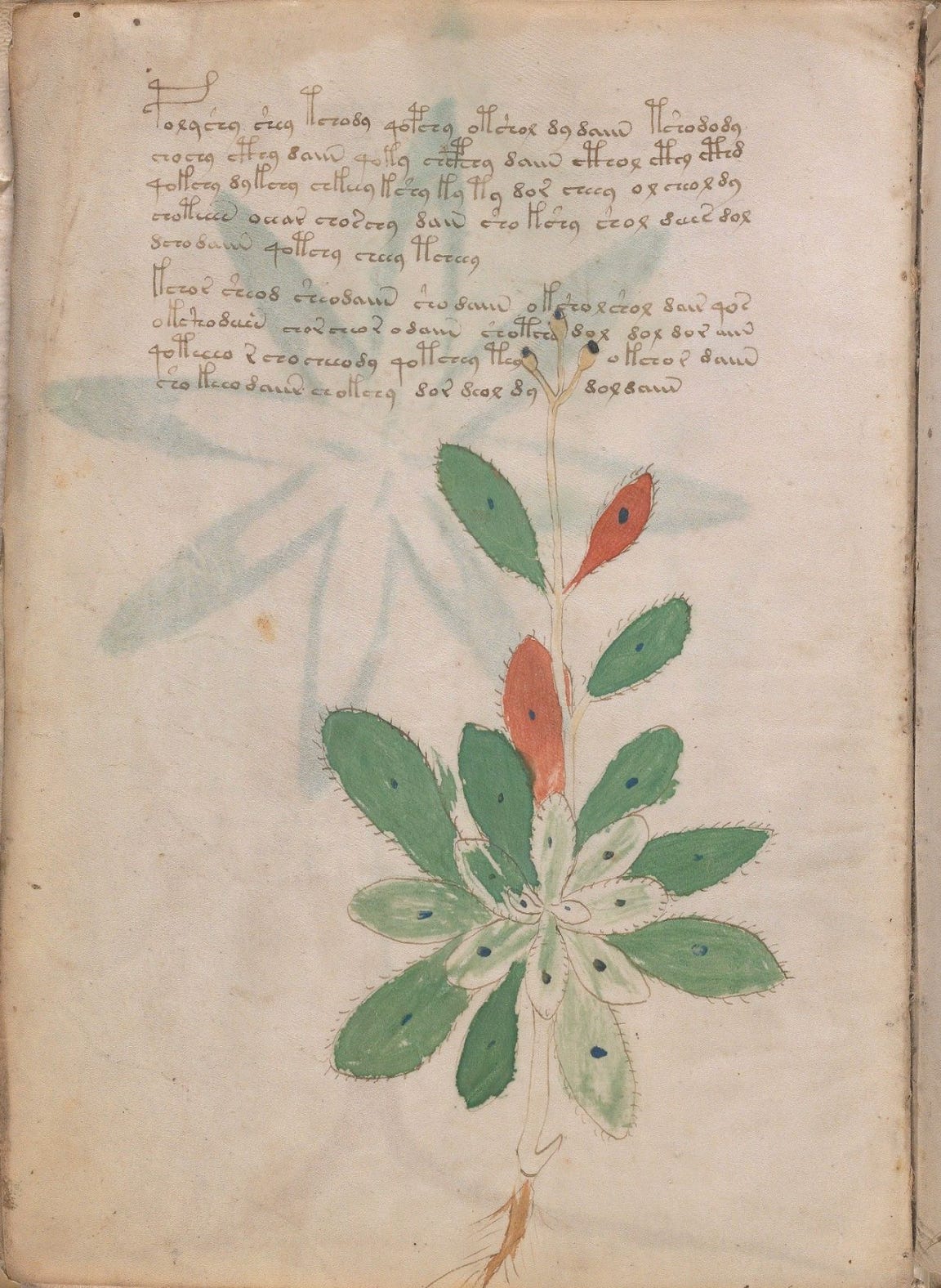
I told you then that before I came north as a young man I thought all the little flies flew in from torrid Libya, loved the heat, and were found little further up the boot than my own hometown.9 Yet there they were still, in the Tuscan marshes in autumn; we were shivering as we stripped, and they swarmed around us as if preparing to draw blood. But they did not, and then we dove in, and were protected by the salty water.
I sang to you like a troubadour in Occitan10 — words of love as if I were joking. But if I joked, it is only because I was a coward, and could only speak truth by pretending I was insincere. As I recall there is another Occitan ditty that speaks of just this sort of cowardice, though that is not the one I sang. Anyhow I assumed you knew the truth. I assumed the little flies and the bogs and the night themselves could not fail to see the truth of my Love for you.
Apply to participate in the Hinternet Foundation Summer School,
“WHITHER THE HUMANITIES?”,
taking place in August, 2026. Application deadline June 1.
And please support our work here at The Hinternet by taking out a premium subscription — for just $6 per month
Interpreting
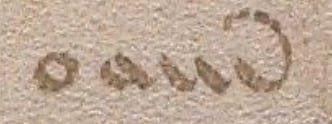
which would more precisely be transliterated as kapšag, as an onomatopoeia, rendered here according to the conventions of forming such sound-words in English.
This is a key piece of information, as it strongly suggests that the inhabitants of the City have adopted the cosmological model put forth by Plato’s student Eudoxus (c. 408 - c. 350 BCE), who posited twenty-six concentric spheres in his lost work On Speeds, the content of which is known thanks to a succinct summary in Aristotle’s Metaphysics XII, 8. How in particular the City came to inherit a Eudoxian cosmology, and then to adapt it with the addition of their own manufactured dome as a new “celestial sphere”, remains entirely unclear. On Eudoxus, see Otto Neugebauer, A History of Ancient Mathematical Astronomy, 3 vols., New York: Springer, 1975, especially vol. 2, pp. 677-685.
This pair of notions naturally suggests Aristotle’s On Generation and Corruption, where the latter term is more general in its scope than “death”, to the extent that it includes such phenomena as the curdling of milk or the evaporation of dew — effectively the ceasing-to-be of anything at all, or at least its ceasing to be what it previously was.
Already in Plato’s Timaeus (63a) the term “antipodes” is used to describe the hypothetical opposite side of a spherical earth. But as a geographical designation for the unexplored southern hemisphere it would only become current in the first century BCE with Strabo’s Geographica (1.1.13). Over the centuries various myths and speculations would take shape about the inhabitants of this region, the Antipodeans, and medieval logic and physics are abounding with reflections on how it is that these people, should they exist, do not fall downwards into the sky. Only in the fifteenth century will the term gradually be replaced by Terra Australis, and some centuries after that by its current designation: Antarctica.
Reading
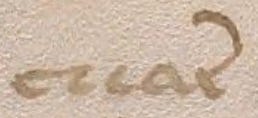
which literally means “forearm”, as a unit of measurement comparable to the Germanic and Anglo-Saxon “ell”, which was originally a length extending from the elbow to the tip of the middle finger. The reader will likely have noticed by now that as a rule I do not rely on other Voynich scholarship in my critical apparatus. Very little has been achieved in this vast body of work that would warrant mention, or that offers viable interpretations of the text that differ from my own. This of course excludes the “sub-rosa” scholarship shoe-horned into various scientific journals under false pretenses, such as that from the Polish Czasopismo nauk rolniczych, already cited in a previous installment (see Part One, footnote 9). On several occasions in the notes to future installments, we will be returning to this and to other “hidden” scholarship. The one work of overt Voynich research that constitutes an exception to our rule of active disinterest is Vitaly Ivanovich Tatur’s Rasshifrovka Rukopisi Voïnicha [Deciphering the Voynich Manuscript] (self-published in pdf form, Kazan, October, 2014, with subsequent additions and corrections through March, 2018). V. I. Tatur is believed to be the pseudonym of Lev’ Petrovich Druzhnikov, a topologist and number theorist in the Faculty of Mathematics at Kazan State University. No communications have been issued under the name of Tatur since 2018, and Druzhnikov denies any familiarity with Tatur’s work. Whatever the case may be, Tatur interprets the word in question to mean “femur”, used here as a unit of measurement. Some rather more significant differences between Tatur’s interpretation of the ms and my own will become clear soon enough.
For a vivid account of thermal baths in early modern Europe, dating from roughly 170 years after the present ms but still giving a clear picture of what were fairly stable practices across the centuries, see Nicolaus Steno’s Disputatio physica de thermis [Physical Disputation on Thermal Baths] (Amsterdam, 1660). Of course, as will become evident, the thermal baths in the present ms were the site of practices that remain, as far as we know, entirely unique in history, but nonetheless certain ideas about their powers to cure and restore the human body are shared by Steno and by our Citizens alike.
Cacus, a name derived from the Greek kakos (“bad”), was a figure of Roman mythology, generally portrayed as a fire-breathing giant, though also, as for example in Dante’s Inferno, as a centaur from whose back grow snakes. In many ancient sources, Cacus angers Hercules, who eventually kills him, when he steals four bulls and as many cows from the hero. We should also perhaps mention in this connection the evocative 1970 poem, untitled, by Jim Glinnon, a largely forgotten figure of the so-called San Francisco Renaissance, who was gored to death by a bull that same year on the island of Delos in what has been described as a “Dionysian sacrifice gone wrong”:
Men are fools who deny intelligence
To the stars, saying: they are only light.
For what else is light but the sign of it?
As the stars arrange our affairs on earth,
Make propitious the catching of tunny
Between the rise of Pleiads and the fall of
Arcturus, or the dawning Sun gives
The cock to know to crow its morning tattoo,
So I rise to look out the window
Of the Apartments of the Elements;
Cacus the Ox-Thief is already at it, again,
No more ashamed in his work than the light
Of the glorious dawn that bathes him.
This is the first reference in the manuscript to a concrete geographical location, one that also helps us to place the author’s region of origin in relation to it. The Terme de Montecatini, in the Pistoia province of Tuscany, were frequented at least as early as 1340, and valued for the saline springs’ supposed medicinal virtues. Part of the region of Pistoia is covered by the Fuecchio Marshes, which were frequently the cause of outbreaks of malaria, as seems to have been the case at the time of the author’s visit there, which we may estimate to have occurred within the first three decades of the fifteenth century.
Scholars generally suppose that comparison of the Italian peninsula to the shape of a boot did not become a commonplace until Abraham Ortelius’s Thesaurus geographicus of 1587. It is possible nonetheless that the metaphor was circulating orally well before that. We know with certainty at least that in antiquity the Romans did not conceive cartographic representations from a bird’s eye view at all, and so although they knew the shape of the peninsula fairly precisely they did not have the same opportunity to notice its resemblance to a boot (nor, it is worth adding, did the Romans have the sort of boots that Italy resembles). Tatur (DVM, 12th edition, September, 2017) takes the reference to the boot as a rare and revealing anachronism that exposes what he takes to be Voynich’s singular hoax. In his view, the ms is written in a so-called “verbose cipher”, in which individual letters are encoded by clusters of symbols rather than by a single symbol. More intriguingly, Tatur maintains that this cipher was invented, and the ms was entirely fabricated, by Voynich himself. Tatur is not alone in holding this view, but it has become an extremely marginal one ever since the ms was radiocarbon-dated in 2009. Tatur’s manner of dealing with this brute physical fact is that Voynich very carefully curated all the carbon-based materials used in the ms, including the vellum, the ochre, and other ink colorings, from supplies known to date from the early fifteenth century. The greatest obstacle to accepting his argument however is that there is no plausible explanation of how Voynich could have known such a precaution should be taken at all, as this dating technology was only developed in the 1940s, more than a decade after Voynich’s death and more than three decades after he first claimed to possess the ms. It is at least possible if unlikely that the hoaxer anticipated future technologies, or simply knew his craft well enough to know that period materials give a different “feel” than later ones. But Tatur makes no compelling arguments on this point.
Occitan was the common language of the lyric poetry recited by troubadours in Europe throughout the high Middle Ages. These performers traveled a wide circuit, and as a result many Europeans had some familiarity with Occitan without any direct knowledge of the place or the culture of its origin. This is presumably also the case for our author. Tatur (DVM, 2nd edition, June, 2015) however notes that the tradition was abruptly extinguished by the Black Death, which began in 1348, which indeed rather calls into question the idea that an author writing in the early fifteenth century would have been exposed to Occitan-language troubadours in his earlier life. Plainly, further investigation is required.
this is truly incredible work - thank you
Nothing to say, so I guess I'll say it.